
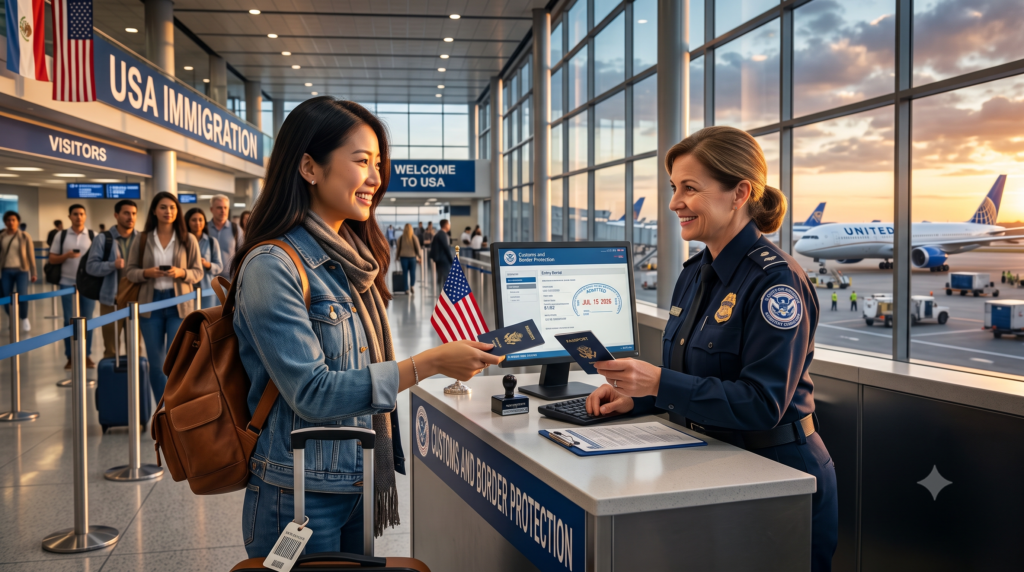
Every year, millions of people travel to the United States for tourism, family visits, business meetings, medical treatment, and other temporary purposes. Before making travel plans, one of the most common questions visitors ask is how long can a visitor stay in USA. Many travelers mistakenly believe that the expiration date printed on their visa determines how long they can remain in the country. In reality, this is one of the biggest misunderstandings about U.S. immigration rules.
A U.S. visitor visa allows you to request entry into the United States, but it does not automatically determine the length of your stay. Instead, the amount of time you are permitted to remain in the country is decided by U.S. Customs and Border Protection (CBP) when you arrive at a U.S. port of entry. The officer reviews your travel purpose, supporting documents, and other factors before authorizing your stay.
Understanding these rules is essential because staying longer than your authorized period can lead to serious immigration consequences, including difficulties obtaining future visas or even restrictions on returning to the United States.
In this guide, you’ll learn everything you need to know about visitor stays in the U.S., including the standard length of stay, how CBP determines your admission period, when visa extensions may be available, the consequences of overstaying, and answers to frequently asked questions.
What Is a U.S. Visitor Visa (B1/B2)?
A U.S. visitor visa is a nonimmigrant visa issued to people who wish to enter the United States temporarily. The two primary categories are the B1 visa for business-related travel and the B2 visa for tourism and personal visits. In many cases, travelers receive a combined B1/B2 visa, allowing them to visit for either purpose.
It is important to remember that a visitor visa is intended only for temporary visits. It cannot be used for permanent residence or unauthorized employment in the United States.
Understanding the B1 Visa
The B1 visa is designed for individuals traveling to the United States for legitimate business activities that do not involve accepting employment from a U.S. employer.
Common reasons for obtaining a B1 visa include:
- Attending business meetings
- Participating in professional conferences
- Negotiating contracts
- Consulting with business partners
- Settling business matters
- Participating in short-term training under certain conditions
A B1 visa allows travelers to conduct temporary business activities while maintaining their primary residence outside the United States. However, it does not permit employment, paid work, or receiving a salary from a U.S. company.
Understanding the B2 Visa
The B2 visa is intended for visitors traveling for personal or recreational purposes.
Typical reasons for using a B2 visa include:
- Tourism and sightseeing
- Visiting family and friends
- Taking a vacation
- Receiving medical treatment
- Participating in social events
- Attending amateur competitions without payment
Many international visitors use the B2 visa to explore famous U.S. destinations, reunite with loved ones, or receive specialized medical care. Like the B1 visa, the B2 visa is intended only for temporary stays.
Combined B1/B2 Visa
Most applicants receive a combined B1/B2 visa, providing flexibility for both business and tourism during different trips.
For example, someone may travel to attend a conference on one visit and return later for a family vacation using the same visa.
Many B1/B2 visas are issued as multiple-entry visas, meaning the holder may travel to the United States multiple times during the visa’s validity period. However, this does not mean visitors can stay continuously until the visa expires.
One of the most important distinctions every traveler should understand is the difference between visa validity and authorized stay.
- Visa validity determines how long you may use the visa to request admission to the United States.
- Authorized stay determines how long you may legally remain in the country after each admission.
These are two completely different concepts, and confusing them can lead to immigration problems.
How Long Can a Visitor Stay in USA?
Now let’s answer the question most travelers ask:
How long can a visitor stay in USA?
In many cases, visitors BUY PASSPORT ONLINE admitted under a B1 or B2 visa receive permission to stay for up to six months. However, six months is not guaranteed for every traveler.
The actual length of stay depends entirely on the decision made by the CBP officer when you arrive in the United States.
Some visitors may receive permission to stay for:
- A few weeks
- One month
- Three months
- Up to six months
- Another period based on their travel purpose
Every admission is evaluated individually.
For example:
- Someone attending a three-day business conference may receive a shorter authorized stay than someone visiting family for several months.
- A traveler seeking medical treatment may receive additional time if medical documentation supports the request.
The CBP officer considers several factors before deciding how long your visit should last.
It is also important to understand that How Long Does It Take to Get Travel Visa receiving a 10-year multiple-entry visa does not mean you can stay in the United States for 10 years. Instead, the visa simply allows you to travel to a U.S. port of entry during its validity period and request admission.
Each time you enter the country, CBP decides how long you may remain.
For this reason, travelers should always check their authorized period of stay after entering the United States instead of assuming they automatically receive six months.
Who Decides How Long You Can Stay?
Many travelers believe the U.S. Embassy or length of stay in the United States Consulate determines how long they can remain in the country. In reality, the embassy only issues the visa. The authority to determine your authorized stay belongs to U.S. Customs and Border Protection (CBP).
Role of U.S. Customs and Border Protection (CBP)
When you arrive at a U.S. airport, land border, or seaport, a CBP officer conducts an inspection before admitting you into the United States.
During this inspection, the officer may ask questions such as:
- Why are you visiting the United States?
- How long do you plan to stay?
- Where will you be staying?
- Who are you visiting?
- When is your return flight?
- How will you support yourself financially during your trip?
These questions help the officer verify that your visit matches the purpose of your visa.
The officer may also review supporting documents, including:
- Return airline tickets
- Hotel reservations
- Invitation letters
- Financial statements
- Medical appointment records
- Conference registrations
Providing clear, honest, and consistent answers helps demonstrate that you intend to follow U.S. immigration laws.
Ultimately, the CBP officer has the authority to decide:
- Whether to admit you into the United States
- How long you may stay
- Whether additional inspection is necessary
This decision is made individually for every traveler and every trip.
Form I-94 Arrival/Departure Record
After being admitted to the United States, one of the most important documents you should check is your Form I-94 Arrival/Departure Record.
The I-94 includes:
- Your admission date
- Your visa classification
- Your authorized departure date
For most travelers arriving by air or sea, the I-94 is created electronically.
The expiration date on your I-94—not the expiration date printed on your visa—is what determines how long you may legally remain in the United States.
For example, your visitor visa may remain valid for another eight years, but if your I-94 authorizes a six-month stay, you must leave the United States or obtain an approved extension before that six-month period ends.
Travelers should check and download their electronic I-94 shortly after arrival through the official CBP website. Verifying your I-94 helps ensure you know your exact authorized departure date and reduces the risk of accidentally overstaying.
Factors That Affect Your Length of Stay
Although many visitors are admitted to the United States for up to six months, there is no automatic rule guaranteeing every traveler the same amount of time. Each admission is evaluated individually by U.S. Customs and Border Protection (CBP). Before deciding how long you may legally remain in the country, a CBP officer reviews your travel purpose, documentation, and overall circumstances.
Understanding these factors can help you prepare for your trip and reduce the chances of delays or questions at the port of entry.
Purpose of Your Visit
One of the most important factors CBP considers is the purpose of your trip.
Your planned length of stay should match the reason for your visit. For example, someone attending a five-day business conference will usually need a much shorter stay than someone visiting close family members for several months.
Likewise, a traveler receiving medical treatment may require additional time depending on the physician’s recommendations and treatment schedule.
The clearer and more reasonable your travel plans are, the easier it is for the CBP officer to determine an appropriate admission period.
Supporting Documentation
Carrying the right documents can strengthen your case during the inspection process.
Helpful documents include:
- Return airline ticket
- Hotel reservations
- Invitation letters from family or friends
- Business conference registrations
- Medical appointment confirmations
- Travel itinerary
- Proof of financial support
These documents help demonstrate that your visit is temporary and consistent with the purpose of your visa.
Previous Travel History
Your travel history is another important factor.
If you’ve previously visited the United States and always departed before your authorized stay expired, CBP is more likely to view your record favorably.
However, previous immigration violations, overstays, or unauthorized employment may raise concerns and lead to additional questioning.
Immigration History
CBP officers may also review your overall immigration history.
This can include:
- Previous U.S. visa refusals
- Prior overstays
- Removal or deportation history
- Unauthorized employment
- Misrepresentation during previous visa applications
A strong history of complying with immigration laws generally improves your chances of smooth admission.
Financial Resources
Visitors should be able to show that they have enough money to cover their expenses while staying in the United States.
Examples of financial evidence include:
- Recent bank statements
- Credit cards
- Sponsorship letters
- Employment verification
- Income documentation
Demonstrating financial stability helps convince immigration officers that you can support yourself without working illegally in the United States.
Return Ticket
Although not mandatory in every situation, having a confirmed return ticket is highly recommended.
A return reservation shows that you plan to leave the United States before your authorized stay expires, supporting your claim that your visit is temporary.
Ties to Your Home Country
Strong ties to your home country are another important consideration.
Examples include:
- Full-time employment
- Business ownership
- Immediate family members
- Property ownership
- University enrollment
- Financial obligations
These connections indicate that you have compelling reasons to return home after your visit rather than remain in the United States.
Compliance with Previous U.S. Visits
Visitors who consistently follow immigration rules usually experience fewer problems during future trips.
Leaving the United States before your Form I-94 expires demonstrates respect for U.S. immigration laws and strengthens your credibility as a temporary visitor.
Can You Stay Longer Than Six Months?
Sometimes unexpected events occur after arriving in the United States. Medical emergencies, family emergencies, flight cancellations, or other unforeseen situations may prevent you from leaving before your authorized stay expires.
In certain circumstances, visitors may request additional time to remain in the country.
However, receiving an extension is not automatic. Every request is reviewed individually by U.S. Citizenship and Immigration Services (USCIS).
When an Extension May Be Possible
USCIS may approve a visitor visa extension for legitimate reasons, including:
- Unexpected medical emergencies
- Serious illness
- Family emergencies
- Flight cancellations or travel disruptions
- Natural disasters
- Other extraordinary circumstances beyond your control
Simply wanting a longer vacation or additional sightseeing time is generally not considered a sufficient reason for extending your stay.
Applicants should submit clear evidence explaining why they need additional time in the United States.
Applying for a Visitor Visa Extension
Visitors who need more time typically apply by filing Form I-539, Application to Extend or Change Nonimmigrant Status.
Submitting Form I-539 does not guarantee approval. USCIS carefully reviews every application before making a decision.
Basic Eligibility Requirements
To qualify for an extension, you generally should:
- Have been lawfully admitted to the United States.
- Continue meeting the conditions of your visitor status.
- Have a valid reason for requesting more time.
- Maintain a valid passport.
- Avoid violating any immigration laws.
Failure to meet these requirements may result in your application being denied.
Apply Before Your I-94 Expires
Timing is one of the most important parts of the extension process.
You should submit your application before the expiration date listed on your Form I-94.
Waiting until after your authorized stay expires can create serious immigration problems and reduce your chances of receiving approval.
Whenever possible, file your application well in advance to allow USCIS enough time to process your request.
Waiting for a Decision
Processing times vary depending on USCIS workloads and individual cases.
If your extension application was properly filed before your I-94 expired, you may generally remain in the United States while USCIS reviews your case, provided you continue following all immigration rules.
Keep copies of every document you submit and regularly monitor your application status throughout the process.
What Happens If You Overstay?
An overstay occurs when you remain in the United States beyond the departure date shown on your Form I-94 without receiving an approved extension or another lawful immigration status.
Even a short overstay can create significant immigration complications.
Understanding these risks can help you avoid costly mistakes.
Immediate Immigration Consequences
If you remain after your authorized stay expires, you are no longer maintaining lawful visitor status.
Depending on your situation, this may affect:
- Future visa applications
- Future entry into the United States
- Immigration benefits
- Your overall immigration record
Future Visa Problems
An overstay becomes part of your immigration history.
During future visa interviews, consular officers often review whether you complied with immigration laws during previous visits.
A history of overstaying can make obtaining another visitor visa much more difficult.
Possible Re-entry Bans
Extended periods of unlawful presence may result in restrictions on returning to the United States after you leave.
The length of any re-entry bar depends on your specific circumstances and applicable U.S. immigration laws.
If you believe you have overstayed or may become out of status, consider seeking advice from a qualified immigration attorney or accredited legal representative.
Impact on Future Immigration Applications
Overstaying may also affect future immigration opportunities, including:
- Student visas
- Employment-based visas
- Family-sponsored immigration
- Permanent residence (Green Card) applications
- Other immigration benefits
Following immigration rules during every visit helps preserve your future travel and immigration options.
Leave Before Your Authorized Stay Ends
The safest approach is simple:
Always monitor the expiration date on your Form I-94 and leave the United States before your authorized stay ends unless you have already filed a timely extension request or obtained another lawful immigration status.
Keeping copies of your boarding passes, travel itineraries, and departure records can also help demonstrate compliance during future visa applications.
By respecting the conditions of your visitor status, you reduce the risk of immigration complications and improve your chances of returning to the United States smoothly in the future.
Can You Leave and Re-enter to Reset Your Stay?
One of the most common questions international travelers ask is whether they can leave the United States for a short period and then return to receive another six-month stay. Many people assume that leaving the country for a few days automatically “resets the clock,” allowing them to remain in the U.S. indefinitely through repeated visits.
The truth is that this strategy does not work the way many people believe.
Every time you arrive at a U.S. airport, land border, or seaport, U.S. Customs and Border Protection (CBP) treats your arrival as a new application for admission. Even if you hold a valid multiple-entry B1/B2 visitor visa, CBP officers will review your travel history, the purpose of your trip, and other relevant factors before deciding whether to admit you and how long you may stay.
There is no immigration rule stating that leaving the United States for one day, one week, or even one month automatically qualifies you for another six-month stay.
Every Entry Is Evaluated Separately
Whenever you enter the United States, a CBP officer evaluates your circumstances individually.
The officer may consider several factors, including:
- The purpose of your current trip
- The length of your previous visits
- The amount of time spent outside the United States
- Your overall travel history
- Your immigration record
- Your financial ability to support yourself
- Your ties to your home country
Even if you were granted a six-month stay during your last visit, there is no guarantee you will receive the same amount of time again. Depending on your travel pattern, CBP may authorize a shorter stay or ask additional questions before making a decision.
Risks of Frequent Long Visits
There is no official limit on how many times you can visit the United States using a valid visitor visa. However, frequent or lengthy visits may attract additional scrutiny.
For example, if you stay in the United States for six months, leave for only a few weeks, and then return for another six months, immigration officers may question whether you are using a visitor visa to live in the United States rather than for temporary visits.
Visitor visas are intended for short-term travel, not long-term residence.
Signs CBP May Believe You’re Living in the U.S.
CBP officers may ask additional questions if they notice travel patterns such as:
- Spending more time in the United States than in your home country
- Returning shortly after a lengthy stay
- Having no stable employment or residence outside the United States
- Carrying an unusually large amount of personal belongings
- Giving inconsistent explanations about the purpose of your visits
These situations do not automatically result in denial of entry, but they may lead to additional inspection or a shorter authorized stay.
Best Practices for Repeat Visitors
If you travel to the United States regularly, follow these best practices:
- Ensure every trip matches the purpose of your visitor visa.
- Spend a reasonable amount of time in your home country between visits.
- Maintain strong family, employment, or financial ties to your home country.
- Carry supporting documents whenever appropriate.
- Leave the United States before your Form I-94 expires.
- Always answer CBP officers honestly and consistently.
Following these recommendations demonstrates that your visits are temporary and that you respect U.S. immigration laws.
Visitor Visa vs. ESTA vs. Visa Waiver Program
Many travelers confuse the B1/B2 Visitor Visa with ESTA authorization under the Visa Waiver Program (VWP). Although both allow temporary travel to the United States, they serve different purposes and have different requirements.
FeatureVisitor Visa (B1/B2)ESTA (Visa Waiver Program)
Who uses it? Citizens of countries that require a U.S. visa Citizens of Visa Waiver Program countries
Typical stay Up to six months Up to 90 days
Extension possible? Sometimes, through USCIS Generally not permitted
Application method U.S. Embassy or Consulate Online ESTA authorization
Visa interview Usually required Not required
Purpose Business, tourism, family visits, medical treatment Business or tourism
Visitor Visa (B1/B2)
A B1/B2 visitor visa is generally the right choice for travelers who:
- Need to stay in the United States for more than 90 days
- Come from countries that are not part of the Visa Waiver Program
- Expect to make multiple visits over several years
- May need to request a visitor stay extension in certain circumstances
ESTA
ESTA is not a visa. It is an electronic travel authorization available only to eligible travelers from Visa Waiver Program countries.
Travelers using ESTA:
- May stay in the United States for up to 90 days
- Generally cannot extend their stay
- Must receive ESTA approval before boarding a flight or ship to the United States
Understanding the differences between a visitor visa and ESTA helps you choose the correct travel authorization before your trip.
Tips to Avoid Immigration Problems
Following U.S. immigration laws not only helps ensure a smooth trip but also protects your ability to visit the United States in the future.
Keep Copies of Important Documents
Always keep copies of important travel documents, including:
- Passport
- Visitor visa
- Form I-94
- Boarding passes
- Hotel reservations
- Return airline tickets
These documents may be useful if immigration officials request additional information during future visits.
Monitor Your Form I-94
Many visitors mistakenly focus only on their visa expiration date.
Instead, pay close attention to your Form I-94, which determines how long you are legally allowed to stay in the United States.
Leaving before your I-94 expires is one of the most important responsibilities of every visitor.
Do Not Work Without Authorization
A visitor visa does not authorize employment in the United States.
Working without proper authorization may result in:
- Visa cancellation
- Removal proceedings
- Difficulty obtaining future visas
- Other immigration penalties
Always ensure your planned activities are consistent with your visa category.
Avoid Unauthorized Study
Although short recreational courses may be permitted in some situations, enrolling in a full-time academic program usually requires a student visa.
If you plan to study in the United States, obtain the appropriate immigration status before beginning your course.
Maintain Evidence of Your Travel Purpose
Keep documents that support the reason for your visit, such as:
- Hotel confirmations
- Conference registrations
- Medical appointment letters
- Invitation letters
- Return flight information
Having these records available can help answer questions during future inspections.
Leave Before Your Authorized Stay Ends
One of the easiest ways to protect your immigration record is to leave the United States before your authorized stay expires.
If unexpected circumstances prevent you from leaving on time, consider applying for a visitor visa extension before your Form I-94 expiration date.
Common Myths About Visitor Stays
Many misconceptions about visitor visas continue to circulate online. Understanding the facts can help you avoid costly immigration mistakes.
A 10-Year Visa Means You Can Stay for 10 Years
A 10-year visitor visa only allows you to travel to a U.S. port of entry during its validity period. It does not allow you to remain in the United States for 10 years continuously.
Each time you enter the country, CBP decides how long you may stay.
Everyone Automatically Receives a Six-Month Stay
While many visitors receive permission to stay for up to six months, there is no guarantee.
CBP determines the authorized stay individually based on your travel purpose and circumstances.
Leaving the U.S. for One Day Resets Your Stay
Leaving the country briefly does not automatically qualify you for another six-month stay.
Each entry is evaluated separately, and CBP carefully reviews your travel history before making a decision.
My Visa Expiration Date Determines How Long I Can Stay
The expiration date on your visa does not determine your authorized stay.
Instead, your Form I-94 Arrival/Departure Record specifies the date by which you must leave the United States.
I Can Work Remotely Without Immigration Concerns
Whether remote work is permissible while visiting the United States depends on the specific facts of your situation and applicable immigration rules.
If your planned activities could be considered employment, it’s important to understand the relevant immigration requirements before traveling rather than assuming all remote work is allowed.