
This complete guide explains how to get a UK passport step by step. It covers who may be eligible, the difference between British citizenship and a passport, first adult passport applications, child passports, applications after naturalisation or registration, required documents, photographs, identity confirmation, application fees, processing considerations, common mistakes, and what to do if your documents are complicated or incomplete.
Whether you are a British citizen, a newly naturalised citizen, a student, a professional, a family member of a British national, or someone preparing official documents for an application, this guide will help you understand the process clearly.
What Is a UK Passport?
A UK passport is an official travel document issued to eligible British nationals. It is used to prove identity and nationality when travelling internationally and can provide access to consular assistance when a British national is overseas.
Many people use the expression “UK passport” to mean a British passport. However, eligibility depends on your British nationality status. British citizenship is the most common status associated with a British passport, but the United Kingdom recognises several categories of British nationality.
Before applying, it is important to understand that having a UK connection does not automatically mean you can receive a British passport. Your eligibility depends on your nationality status and individual circumstances. The official eligibility rules should be checked before submitting an application.
Who Can Get a UK Passport?
The first and most important question is whether you have the necessary British nationality status. British citizenship is the most common route to a British passport, but other British nationality categories may also be relevant in certain circumstances.
British Citizens
British citizens generally have the right to apply for a British passport. You may be a British citizen because of:
- Being born in the UK in circumstances where British citizenship was acquired
- Having a British parent
- Being born outside the UK to British parents, depending on the circumstances
- Being registered as a British citizen
- Becoming a British citizen through naturalisation
- Other provisions of British nationality law
It is important to remember that being born in the UK does not automatically make every person a British citizen. The date of birth, parents’ nationality, immigration status, and other circumstances may affect citizenship status.
People Who Recently Became British Citizens
If you have recently received a certificate of naturalisation or registration, you may be able to apply for your first British passport. In this situation, the passport application normally requires evidence of your British nationality and may also require documents connected with your previous nationality or immigration history.
For example, a person who became British through naturalisation may need to provide their naturalisation certificate and the passport or travel document used to enter the UK, depending on their circumstances.
Other British Nationality Categories
The United Kingdom recognises different categories of British nationality, including British citizenship, British overseas territories citizenship, British overseas citizenship, British national (overseas) status, British subject status, and British protected person status.
The type of passport or travel document available may depend on the specific nationality category. Therefore, if you are not sure whether you are a British citizen or hold another form of British nationality, it is important to check your status before beginning a passport application.
Step 1: Confirm Your British Nationality Status
Before asking “how do you get a UK passport?”, first ask: “Am I eligible to hold a British passport?”
This is especially important if:
- You were born outside the UK
- You have a British parent
- You were born in the UK, but your parents were not British citizens
- You recently received British citizenship
- You have more than one nationality
- You hold a British nationality status other than British citizenship
- Your name or personal details have changed
- Your nationality documents contain inconsistencies
If you are already a British citizen, you may be able to proceed with a passport application. If you are not yet British, you may first need to explore whether you qualify for citizenship by birth, descent, registration, or naturalisation.
Step 2: Decide Whether You Need a First Passport or a Renewal
The application process depends on your situation.
First Adult UK Passport
A first adult passport is generally relevant when you are applying for your first passport as an adult. You may also need a first adult application if you have never previously held a British passport.
A first application usually requires more evidence than a straightforward renewal because the passport authority may need to establish your identity and nationality from supporting documents.
Child UK Passport
Children under the relevant age limit usually require a child passport application. A child passport application has different requirements from an adult passport application and may involve evidence of the child’s identity, nationality, parental details, and consent.
Renewing an Existing UK Passport
If you already have a British passport, renewal may be more straightforward. The application process may use information from your previous passport, although you must still provide accurate information and comply with current application requirements.
Renewal should not be confused with applying for a first passport. A person who has recently become British may still need to submit a first passport application even if they previously held a passport from another country.
Step 3: Gather Your Supporting Documents
Preparing the correct documents is one of the most important parts of the application process. The exact documents required depend on your circumstances.
Common documents may include:
- Birth certificate
- Naturalisation certificate
- Registration certificate
- Current or previous passport
- Immigration documents
- Evidence of identity
- Documents showing a change of name
- Marriage or civil partnership documents where relevant
- Evidence connected to a British parent
- Other nationality or citizenship documents
You should not assume that every applicant needs the same documents. A British citizen born in the UK may have different evidence requirements from a person born abroad who became British through naturalisation.
Applying After Naturalisation
If you became a British citizen through naturalisation, your naturalisation certificate is usually a key document. Depending on your circumstances, you may also need the passport or travel document you used to enter the UK.
One of the most common mistakes is submitting a citizenship certificate without checking whether additional identity or nationality evidence is required. The correct document list can vary depending on the applicant’s background.
Applying Based on British Parentage
If your British nationality is connected to a parent, you may need to provide documents showing the relationship and your parent’s British status. Birth certificates, nationality documents, and other supporting evidence may be relevant.
Because nationality law can be complex, people born outside the UK should carefully check their eligibility and documentation before applying.
Step 4: Check That Your Personal Details Are Consistent
Before submitting your application, compare the information across your documents.
Check:
- Your full name
- Date of birth
- Place of birth
- Parents’ names
- Nationality details
- Previous passport information
- Spelling and transliteration of names
Even a small difference can create questions during the application process. For example, one document may spell a surname as “Rahman” while another uses “Rehman.” A birth record may contain a different spelling of a middle name from a naturalisation document.
This does not necessarily mean that your application will be refused. However, inconsistencies may require additional explanation or evidence.
Step 5: Prepare a Suitable Passport Photograph
A passport photograph must meet the applicable requirements. For an online application, you will generally need a suitable digital photograph. For paper applications, printed photographs may be required.
Common photograph problems include:
- Incorrect dimensions
- Poor lighting
- Blurred images
- Shadows across the face
- Incorrect background
- Headwear that is not permitted
- Facial expressions that do not meet the requirements
- Low-quality digital files
- Heavy editing or filters
Do not use a heavily edited selfie or an image digitally altered to change your appearance. A passport photograph must accurately represent you.
Digital Photos for Online Applications
If you apply online, you may be able to use a digital photo taken with a suitable device or obtain a compliant digital photograph from a photo service.
Before uploading the image, check that it is clear, recent, and meets the current technical requirements. A photo that appears acceptable to you may still be rejected if it does not meet the official specifications.
Step 6: Choose the Correct Application Method
Most applicants applying from within the UK can apply online. A paper application route may also be available in certain circumstances.
Online Application
For many applicants, applying online is the most convenient option. The online process allows you to:
- Complete the application electronically
- Upload or provide a suitable digital photograph
- Enter your personal details
- Provide supporting information
- Pay the application fee
- Receive application instructions
Online applications can also reduce the risk of handwriting-related errors and make it easier to review information before submitting.
Paper Application
Some applicants may choose or need to apply using a paper form. Paper applications typically require the completed form, supporting documents, photographs, and the applicable fee.
Paper applications may take longer and may require additional steps. Always follow the instructions provided with the application form.
Step 7: Complete the Application Carefully
When completing the application, answer every question accurately and honestly.
Pay particular attention to:
- Your current legal name
- Previous names
- Date and place of birth
- Nationality
- Parents’ information
- Previous passports
- Immigration and nationality history where requested
- Contact details
Do not guess important information. If you are uncertain about a date, document number, or historical detail, check your records before submitting the application.
Incorrect information can lead to delays, additional questions, or a request for further evidence.
Step 8: Arrange Identity Confirmation If Required
Some first passport applicants may need another person to confirm their identity. This person is sometimes known as a countersignatory or identity confirmer, depending on the application process.
The requirements may depend on the application route and the applicant’s circumstances.
Identity confirmation helps the passport authority verify that:
- You are the person named in the application
- Your photograph represents you
- Your identity information is genuine
If the application asks for someone to confirm your identity, make sure that person meets the relevant requirements. Choosing someone who does not qualify may result in the application needing further action.
Step 9: Pay the Correct Passport Fee
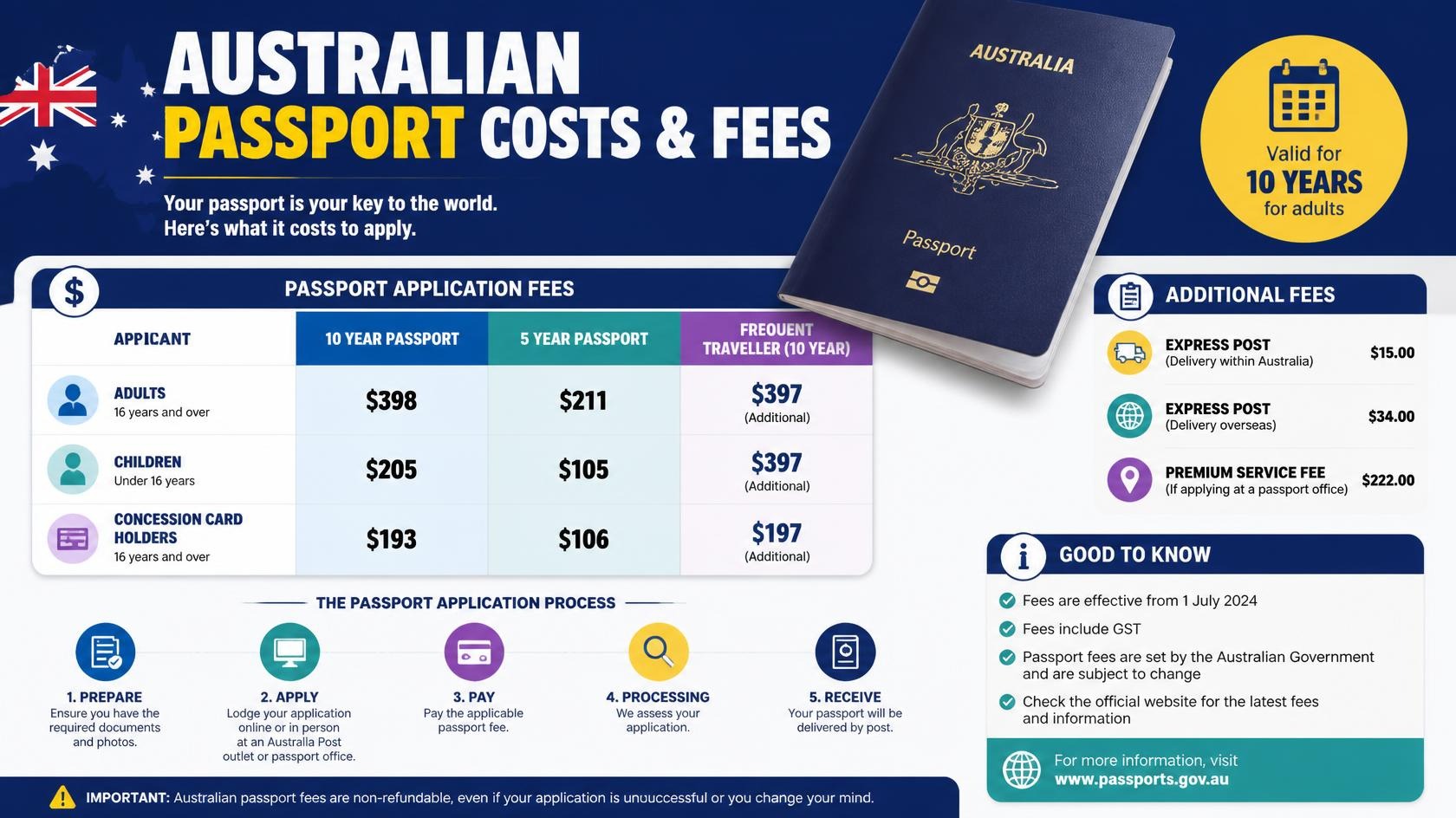
Passport fees can change, so applicants should always check the current official fee before applying.
As of the latest available UK government fee information in 2026, standard fees include:
Fees may differ for frequent traveller passports, urgent services, overseas applications, and other application categories. The amount you pay may also depend on where you are applying from.
For this reason, never rely on an old blog post or outdated fee table when submitting an application.
Step 10: Submit Your Documents
After submitting the application, you may be instructed to send supporting documents. Follow the instructions carefully and send only the documents requested.
Before sending anything, consider making copies or secure scans of important documents for your own records.
Make sure:
- The documents are originals where originals are requested
- Documents are not damaged unnecessarily
- The correct address or submission method is used
- Any required photographs are included
- Supporting documents are organised clearly
If your documents are not in English or Welsh, you may need an appropriate translation depending on the requirements of the application. Certified translation services can help applicants prepare translated documents in a professional format, but the exact acceptance requirements should always be checked for the specific application.
How Long Does It Take to Get a UK Passport?
Processing times can vary depending on the application type, whether the application is complete, whether additional checks are needed, and whether the passport authority requires more information.
Applications may take longer when:
- Supporting documents are missing
- Information is inconsistent
- Identity checks require additional investigation
- Nationality evidence is complicated
- The applicant has an unusual citizenship history
- Documents require further verification
- The application is submitted during a high-demand period
It is important not to book non-refundable travel based solely on an assumption about processing time. If you have urgent travel plans, check whether an official urgent passport service may be available for your circumstances.
Can You Get a UK Passport If You Are Not a British Citizen?
In most cases, you cannot simply apply for a British passport because you live in the UK, work in the UK, study in the UK, or hold indefinite leave to remain.
Immigration status and nationality are different concepts.
For example:
- A person with a UK visa may not be a British citizen.
- A person with indefinite leave to remain may not automatically be British.
- A person with settled status may still need to apply separately for British citizenship.
- A person born in the UK may or may not be British, depending on the circumstances.
If you are not British, you may first need to determine whether you qualify for British citizenship through naturalisation, registration, or another route.
How Do You Get a UK Passport After British Citizenship?
If you have recently become a British citizen, the process generally involves several stages.
First, Receive Evidence of British Citizenship
You may receive a certificate of naturalisation or registration, depending on how you became British.
Second, Prepare Your Supporting Documents
Review the document requirements carefully. Your citizenship certificate may be important, but other documents may also be required depending on your background.
Third, Complete the First Passport Application
Apply using the appropriate application method and provide accurate identity and nationality information.
Fourth, Complete Any Identity Checks
If required, arrange identity confirmation or attend any appointment requested by the passport authority.
Fifth, Send Supporting Documents and Wait for Processing
Once the application is complete, the passport authority will assess the information and may contact you if further evidence is needed.
How Do You Get a UK Passport If You Were Born Outside the UK?
Being born outside the UK does not automatically prevent you from obtaining a British passport. Many British citizens are born overseas.
Your application may be based on:
- A British parent
- Registration as a British citizen
- Naturalisation
- Another route under British nationality law
The documentation required will depend on the reason you are British.
For example, someone applying after naturalisation may need a naturalisation certificate and previous travel documentation. Someone claiming citizenship through a British parent may need evidence of the parent-child relationship and the parent’s British status.
Because overseas birth and nationality cases can involve complicated documentation, it is particularly important to check the requirements carefully before applying.
How Do You Get a UK Passport for a Child?
Children generally require a child passport application. The application may involve information about:
- The child’s identity
- The child’s birth
- The child’s nationality
- Parents or guardians
- Parental responsibility
- Consent where applicable
Child passport applications should be completed using the correct process for the child’s age and circumstances.
A child passport is different from an adult passport, and the documents required may vary depending on whether the child was born in the UK, born overseas, or became British through a parent or another route.
Common Reasons UK Passport Applications Are Delayed
Even when an applicant is eligible, delays can occur if the application is incomplete or the evidence raises questions.
1. Missing Supporting Documents
If the passport authority requests evidence that has not been provided, processing may stop while the information is obtained.
2. Inconsistent Personal Information
Different names, dates, spellings, or places of birth can create questions.
3. Poor Photograph Quality
A photograph that does not meet the applicable requirements may need to be replaced.
4. Incorrect Application Route
Applying for a renewal when you actually need a first passport application can cause complications.
5. Unclear Nationality Evidence
Applicants with complex nationality histories may need to provide more evidence than applicants with straightforward circumstances.
6. Incorrect Payment
Using an outdated fee or failing to complete payment correctly can affect the application.
How to Avoid Common UK Passport Application Mistakes
A careful preparation process can reduce avoidable problems.
Before submitting your application:
- Check that you are eligible to apply.
- Use the correct application type.
- Review your name and date of birth carefully.
- Check all supporting documents.
- Use a compliant passport photograph.
- Check the current fee.
- Keep copies of important documents.
- Follow the official instructions carefully.
- Do not send irrelevant documents unless requested.
- Make sure translations meet the applicable requirements.
What If Your Documents Are Not in English?
Applicants may have birth certificates, marriage certificates, citizenship documents, or other official records issued in another language.
In such cases, a professional translation may be required. The exact requirements can vary, so applicants should check what type of translation is acceptable for the application.
A professional document service may assist with:
- Certified translation
- Document preparation
- Document checking
- Legalisation support
- Apostille services
- Identity document preparation
- Citizenship documentation assistance
However, document preparation assistance does not replace the official decision-making authority. The passport authority ultimately decides whether an application meets the relevant requirements.
Can a Document Service Help You Get a UK Passport?
Many applicants use professional document services when they are unsure about paperwork, translation, legalisation, or document preparation.
A professional service may be particularly useful when:
- You have documents issued in another country.
- Your documents require certified translation.
- Your name has changed.
- Your documents contain spelling differences.
- You need help organising supporting evidence.
- You need apostille or legalisation services for another official purpose.
- You are preparing multiple immigration or nationality documents.
For applicants using a service provider, always make sure you understand exactly what the service includes. A reliable provider should explain the process clearly, identify document requirements, and avoid guaranteeing an outcome that only the official authority can decide.
UK Passport Application Checklist
Use this checklist before submitting your application:
- Confirm that you have the correct British nationality status.
- Determine whether you need a first passport, renewal, or child passport.
- Check the current application requirements.
- Prepare your birth, citizenship, nationality, and identity documents.
- Check for differences in names and dates across documents.
- Prepare a compliant digital or printed photograph.
- Complete the application accurately.
- Arrange identity confirmation if required.
- Pay the current application fee.
- Submit supporting documents using the correct process.
- Keep records of your application and reference information.
- Respond quickly if additional information is requested.
Frequently Asked Questions About Getting a UK Passport
How do you get a UK passport for the first time?
To get a UK passport for the first time, you must first be eligible to hold a British passport. You then need to complete the appropriate first passport application, provide the required identity and nationality documents, submit a suitable photograph, pay the applicable fee, and complete any identity checks required for your circumstances.
Can I get a UK passport if I have indefinite leave to remain?
Indefinite leave to remain does not automatically make you a British citizen or automatically qualify you for a British passport. You may need to apply for British citizenship first if you meet the relevant eligibility requirements.
Can I get a UK passport through my British parent?
You may be eligible for British citizenship through a British parent, depending on your date and place of birth, your parent’s status, and the nationality laws applicable to your circumstances. You should confirm your citizenship status and prepare the relevant evidence before applying for a passport.
How much does a UK passport cost?
Passport fees depend on the type of passport, application method, and location. The latest standard fees for applications made from within the UK should be checked before applying because government fees can change.
How long does it take to get a UK passport?
Processing times can vary. A straightforward application may progress differently from an application requiring additional checks or documents. Missing information, inconsistent records, complex nationality circumstances, or document verification can cause delays.
What if I need a certified translation for my passport documents?
If your supporting documents are in another language, you may need a translation that meets the relevant requirements. The exact requirements should be checked for your application. A professional certified translation provider can help prepare documents in an appropriate format.
Important Note About the Keyword How Long Can I Stay in US With Visitor Visa
The keyword “how long can I stay in us with visitor visa” relates to United States visitor visa rules, not UK passport applications. It should not be used repeatedly in this article because it creates a significant mismatch between search intent and the topic of the page.
If you are targeting that keyword, it would be better to create a separate article focused specifically on US visitor visa admission periods, extensions, and travel rules. A separate article could then internally link to relevant immigration documentation or visa assistance services where appropriate.
Final Thoughts: How Do You Get a UK Passport?
So, how do you get a UK passport? The process starts by confirming that you have the appropriate British nationality status. From there, you must choose the correct application type, prepare the required documents, provide an acceptable photograph, complete the application accurately, pay the correct fee, and follow any identity or document submission instructions.
For straightforward applications, careful preparation can make the process easier. However, applications involving overseas birth, naturalisation, registration, multiple nationalities, name changes, missing documents, or foreign-language records can require more attention.
The most important rule is simple: do not assume that every applicant follows the same process. Your nationality history and personal documents determine what evidence you may need.
If you need help preparing identity documents, arranging certified translations, organising supporting paperwork, or obtaining apostille and legalisation services, Elit Documents can help you understand the documentation process and prepare your paperwork more professionally. To explore available document preparation and related services.