
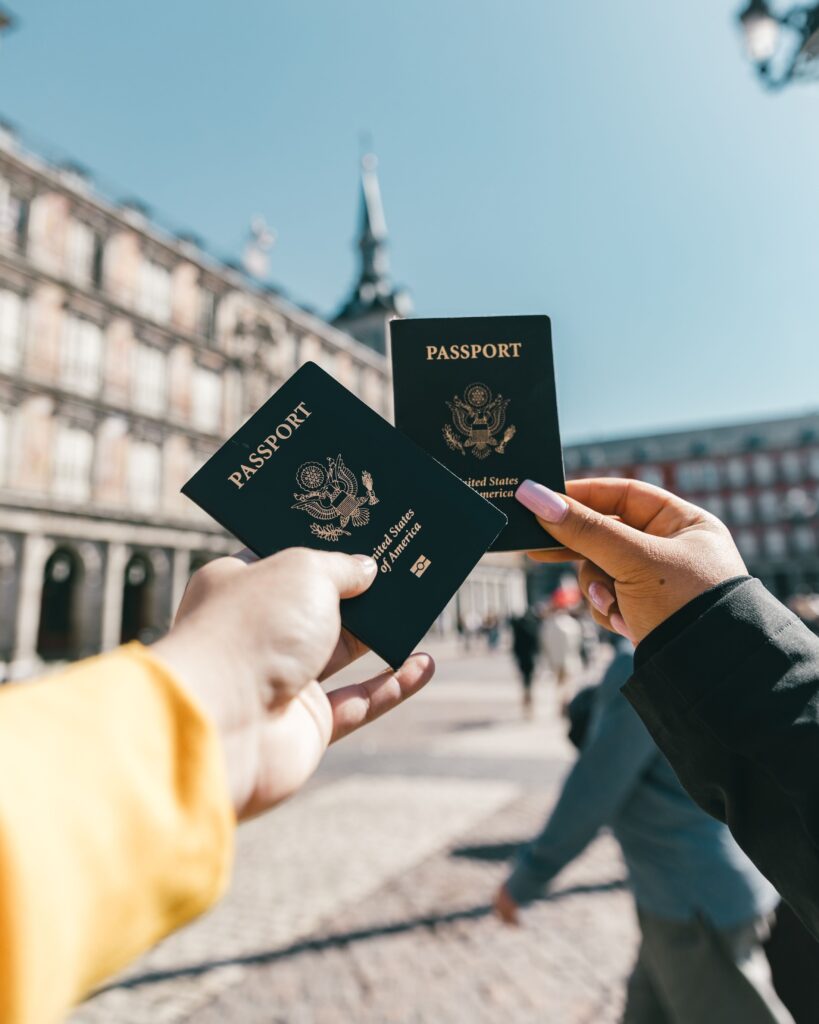
How to get a european passport is issued only to citizens of a European country. You cannot apply directly for a European passport unless you first become a citizen of an eligible European nation. The most common pathways include citizenship by birth, descent, marriage, long-term residence (naturalization), or special investment and exceptional contribution programs where available. Once citizenship is approved, you can apply for that country’s passport by submitting the required documents, paying the applicable fees, and completing the official passport application process.
How to Get a European Passport in 2026
To get a European passport, you must first become a citizen of a European country. Depending on the country, citizenship may be obtained through:
- Birth
- Descent (parents or grandparents)
- Marriage
- Naturalization after legal residence
- Exceptional investment or contribution programs (available in limited countries)
After obtaining citizenship, you can apply for a passport by submitting proof of citizenship, identity documents, passport photographs, and the required application forms to the appropriate government authority.
Table of Contents
- What Is a European Passport?
- What Are the Benefits of Having a European Passport?
- Can Anyone Get a European Passport?
- Who Is Eligible?
- Main Ways to Obtain a European Passport
- Citizenship by Birth
- Citizenship by Descent
- Citizenship by Marriage
- Citizenship Through Naturalization
- Citizenship by Investment or Special Programs
- Which European Countries Offer the Fastest Routes?
- Documents You’ll Need
- Step-by-Step Application Process
- Processing Time
- Costs and Government Fees
- Country-Specific Requirements
- Common Mistakes
- Reasons Applications Are Rejected
- Expert Tips
- Frequently Asked Questions
- Final Checklist
- Conclusion
What Is a European Passport?
A European passport is an official travel document issued by a sovereign European country to its citizens. Although many people use the term “European passport,” there is no single passport issued by the European Union (EU). Instead, each country issues its own passport while many member states share common design standards.
For example:
- German Passport
- French Passport
- Italian Passport
- Spanish Passport
- Portuguese Passport
- Irish Passport
If your country is a member of the European Union, your passport also grants the rights associated with EU citizenship, including freedom of movement across EU member states.
Simply put:
European Citizenship → National Passport → EU Rights (if the country is an EU member).
Why Do So Many People Want a European Passport?
A European passport is widely regarded as one of the world’s most valuable travel documents. Depending on the issuing country, it can provide visa-free or visa-on-arrival access to more than 180 destinations worldwide.
Beyond travel convenience, European citizenship often opens doors to education, healthcare, employment, and long-term residency opportunities across many European countries.
Some of the key benefits include:
| Benefit | Description |
|---|---|
| Visa-Free Travel | Travel to many countries without obtaining a visa in advance. |
| Work Opportunities | Live and work in many EU countries without needing separate work permits (for EU citizens). |
| Education | Access universities with lower tuition fees in many European countries. |
| Healthcare | Eligibility for national healthcare systems where applicable. |
| Family Benefits | Ability to sponsor eligible family members in many situations. |
| Business Expansion | Easier access to European markets for entrepreneurs. |
| Political Rights | Voting rights may apply depending on citizenship and residency laws. |
| Long-Term Security | Permanent citizenship status generally provides lifelong rights unless revoked under exceptional circumstances. |
Can Anyone Get a European Passport?
A European passport is not available simply because someone wants to live or travel in Europe.
You must first qualify for citizenship under the laws of a specific European country.
Each country has its own nationality legislation, eligibility rules, residency requirements, and documentation standards. While there are similarities across Europe, there is no universal EU citizenship application.
For example:
- Germany has its own citizenship laws.
- Italy has different ancestry rules.
- Portugal has different residency requirements.
- Ireland has unique citizenship by descent provisions.
- Spain has different naturalization periods for certain nationalities.
Understanding these differences is essential before starting your application.
Who Is Eligible for a European Passport?
Eligibility depends entirely on the country’s citizenship laws. However, most successful applicants qualify through one of the following legal pathways.
1. Citizenship by Birth
Individuals born in certain countries may automatically receive citizenship depending on the country’s nationality laws.
Eligibility often depends on:
- Place of birth
- Parents’ citizenship
- Residency status of parents
- Nationality legislation
Not every European country grants automatic citizenship based solely on birth within its territory.
2. Citizenship by Descent
Many European countries allow descendants of citizens to claim citizenship.
Examples may include:
- Parent was a citizen.
- Grandparent was a citizen.
- Great-grandparent in limited cases.
- Family records prove lineage.
Countries such as Italy, Ireland, Poland, Hungary, and several others have citizenship-by-descent pathways, although eligibility rules differ significantly.
3. Citizenship Through Marriage
Marrying a citizen of a European country does not automatically grant citizenship.
Instead, marriage often:
- Reduces residency requirements.
- Simplifies eligibility.
- Allows family reunification.
- Provides a pathway toward naturalization after meeting legal conditions.
Applicants must usually demonstrate:
- Genuine marriage
- Legal residence
- Language proficiency (where required)
- Integration into society
4. Citizenship Through Naturalization
Naturalization is one of the most common ways foreigners become citizens.
Applicants generally need to:
- Live legally in the country for several years.
- Maintain lawful immigration status.
- Pay taxes.
- Demonstrate language proficiency.
- Show knowledge of local culture or civics.
- Have a clean criminal record.
- Meet financial requirements where applicable.
Naturalization periods vary widely, ranging from around five years in some countries to ten years or more in others.
5. Exceptional Citizenship Programs
Some countries may grant citizenship for exceptional contributions, humanitarian reasons, or other special circumstances defined by national law.
These are typically limited, highly regulated, and subject to strict government approval. Eligibility criteria vary significantly by country, and applicants should rely only on official government guidance.
The Five Main Ways to Obtain a European Passport
The following table summarizes the primary legal pathways to European citizenship.
| Pathway | Suitable For | Typical Difficulty |
|---|---|---|
| Birth | Individuals born with qualifying citizenship rights | Low |
| Descent | Children or descendants of citizens | Low–Medium |
| Marriage | Spouses of citizens | Medium |
| Naturalization | Long-term legal residents | Medium–High |
| Exceptional Programs | Applicants meeting special legal criteria | High |
Each route has different timelines, documentation requirements, and legal obligations.
Is There a Single European Passport?
One of the biggest misconceptions is that people can apply directly for a “European passport.”
This is incorrect.
There is no centralized European passport office.
Instead, every sovereign country issues its own passport, including:
- Austria
- Belgium
- Croatia
- Cyprus
- Czech Republic
- Denmark
- Estonia
- Finland
- France
- Germany
- Greece
- Hungary
- Ireland
- Italy
- Latvia
- Lithuania
- Luxembourg
- Malta
- Netherlands
- Poland
- Portugal
- Romania
- Slovakia
- Slovenia
- Spain
- Sweden
Additionally, several non-EU European countries—including Norway, Switzerland, Iceland, and the United Kingdom—issue their own national passports under separate legal frameworks.
Choosing the Right Citizenship Path
Before gathering documents or submitting applications, determine which legal pathway best matches your personal circumstances.
Ask yourself:
- Were you born in Europe?
- Do you have European parents or grandparents?
- Are you married to a European citizen?
- Have you legally lived in Europe for several years?
- Do you already hold permanent residence?
- Are you eligible under any special national programs?
Answering these questions early can save significant time, money, and effort by helping you focus on the most appropriate citizenship route.
Main Ways to Get a European Passport
Once you’ve identified the most suitable citizenship pathway, the next step is understanding exactly how each option works. The requirements, processing times, and supporting evidence vary from country to country, but the following sections explain the most common legal routes.
Citizenship by Birth
Citizenship by birth is one of the most straightforward ways to become eligible for a European passport. However, unlike countries such as the United States or Canada, most European countries do not automatically grant citizenship simply because a child is born on their territory.
European countries generally follow one of two legal principles:
| Principle | Meaning |
|---|---|
| Jus Sanguinis (Right of Blood) | Citizenship is inherited from one or both parents. |
| Jus Soli (Right of Soil) | Citizenship is granted based on the place of birth (limited in Europe). |
Most European nations primarily use Jus Sanguinis, meaning the citizenship of the parents is more important than the location of birth.
Common Requirements
- Birth certificate
- Parents’ citizenship documents
- Parents’ passports
- Marriage certificate (if applicable)
- Proof of legal parentage
Citizenship by Descent (Ancestry)
Citizenship by descent is among the fastest and most popular routes for individuals with European ancestry.
If one or more of your parents, grandparents, or even great-grandparents were citizens of certain European countries, you may qualify without living there for many years.
Countries Well Known for Citizenship by Descent
| Country | Parent | Grandparent | Earlier Ancestors |
|---|---|---|---|
| Italy | Yes | Yes | Sometimes |
| Ireland | Yes | Yes | Limited circumstances |
| Poland | Yes | Yes | Possible |
| Hungary | Yes | Yes | Possible |
| Portugal | Yes | Limited | Rare |
| Greece | Yes | Yes | Possible |
Documents Usually Required
- Birth certificates
- Family tree
- Marriage certificates
- Death certificates (if applicable)
- Old passports
- Citizenship certificates
- National identity cards
- Immigration records
- Name change documents
Tips
Many applications fail because applicants cannot prove the family relationship through official records. Collecting complete civil documents before applying can significantly improve the process.
Citizenship Through Marriage
Marriage to a European citizen does not automatically make someone a citizen.
Instead, it usually provides a simplified pathway to citizenship after fulfilling additional legal requirements.
Most countries require applicants to:
- Be legally married
- Live together
- Maintain legal residence
- Meet language requirements
- Pass integration tests (where applicable)
- Demonstrate that the marriage is genuine
Typical Supporting Documents
- Marriage certificate
- Spouse’s passport
- Spouse’s citizenship certificate
- Joint residence evidence
- Joint bank statements (if requested)
- Tax records
- Utility bills
- Photographs or other relationship evidence (if required)
Citizenship Through Naturalization
Naturalization is the most common option for immigrants who have legally lived in a European country for several years.
Although each country has different rules, the process generally includes:
- Obtain a legal residence permit.
- Maintain continuous residence.
- Renew residence permits when necessary.
- Meet the minimum residency period.
- Learn the national language.
- Demonstrate integration into society.
- Maintain a clean criminal record.
- Submit a citizenship application.
- Attend interviews or citizenship tests if required.
- Receive citizenship approval.
- Apply for a passport.
Typical Naturalization Requirements
- Legal residency
- Permanent residence (in many countries)
- Language proficiency
- Stable income
- Tax compliance
- Criminal background check
- Civic knowledge test
- Health insurance (where applicable)
Residency Requirements by Country (Approximate)
The table below provides a general overview of common naturalization residency periods. Always verify the latest rules with the relevant government authority before applying.
| Country | Approximate Residency Requirement |
|---|---|
| Portugal | 5 years |
| Sweden | 5 years |
| Belgium | 5 years |
| France | 5 years |
| Germany | Usually 5 years (subject to applicable law) |
| Netherlands | 5 years |
| Ireland | 5 years (under qualifying conditions) |
| Spain | Generally 10 years (shorter for certain applicants) |
| Italy | Usually 10 years for many foreign nationals |
| Austria | Often 10 years |
Dual Citizenship Considerations
Before applying for European citizenship, determine whether:
- Your current country allows dual citizenship.
- The European country permits dual nationality.
- Renunciation of your existing citizenship may be required in certain situations.
Some European countries broadly recognize dual citizenship, while others apply restrictions or conditions. Because these rules change over time, always confirm the current policy before applying.
Required Documents for a European Passport
After your citizenship application is approved, you’ll typically need to submit documents for the passport itself.
Although requirements differ slightly between countries, the following documents are commonly requested.
Identity Documents
- National ID card (if issued)
- Citizenship certificate
- Birth certificate
- Current passport (if applicable)
Civil Documents
- Marriage certificate
- Divorce certificate
- Adoption records
- Name change certificate
- Death certificate (where relevant)
Residence Documents
- Residence permit
- Permanent residence card
- Address registration
- Utility bills
- Rental agreement (if requested)
Supporting Documents
- Passport photographs
- Completed application form
- Fee payment receipt
- Appointment confirmation
- Biometrics (fingerprints/photo)
- Signature
Complete European Passport Document Checklist
Use this checklist before submitting your application.
Personal Identity
- Passport
- National ID
- Birth certificate
- Citizenship certificate
Civil Status
- Marriage certificate
- Divorce decree (if applicable)
- Adoption papers (if applicable)
- Name change documents
Residence
- Residence permit
- Permanent residence proof
- Proof of address
Financial
- Application fee receipt
- Tax records (if required)
Security
- Police clearance certificate
- Criminal background certificate (if required)
Photos
- Recent passport-size photographs meeting official specifications
Step-by-Step European Passport Application Process
Once citizenship has been granted, obtaining the passport is generally straightforward.
Step 1 – Confirm Citizenship
Ensure you have received official confirmation of citizenship before attempting to apply for a passport.
Step 2 – Gather Documents
Collect all required documents and verify that names, dates, and personal information are consistent across every record.
Step 3 – Complete the Passport Application
Fill out the official application form carefully.
Avoid:
- Spelling mistakes
- Incorrect dates
- Missing signatures
- Blank sections
Step 4 – Book an Appointment
Many countries require appointments at:
- Passport offices
- Municipal offices
- Local government service centers
- Consulates or embassies (if applying from abroad)
Step 5 – Submit Biometrics
Applicants may need to provide:
- Digital photograph
- Fingerprints
- Electronic signature
Children may have different biometric requirements depending on age.
Step 6 – Pay the Government Fee
Passport fees vary depending on factors such as:
- Country
- Applicant’s age
- Passport validity
- Expedited service (if available)
Always use the payment methods accepted by the issuing authority.
Step 7 – Wait for Processing
Authorities will verify:
- Citizenship status
- Identity
- Supporting documents
- Biometrics
- Security checks
If additional information is needed, you may be contacted during processing.
Step 8 – Receive Your Passport
Once approved, you may:
- Collect it in person
- Receive it by secure mail
- Pick it up at an embassy or consulate (for overseas applicants), depending on local procedures
Estimated Processing Times
Processing times vary by country, workload, and application type.
| Application Type | Estimated Time |
|---|---|
| First Passport | 2–8 weeks |
| Passport Renewal | 1–6 weeks |
| Overseas Application | 4–12 weeks |
| Urgent Service (where available) | A few days to 2 weeks |
Actual timelines may be longer during peak travel seasons or if additional verification is required.
Government Fees
Passport fees are set by each country’s government and may change periodically.
Typical factors affecting the cost include:
- Adult or child application
- Passport validity period
- Number of pages
- Standard vs. expedited processing
- Overseas application charges
Check the official passport authority or embassy website for the most up-to-date fee schedule.
Country-Specific Requirements
Although the general process is similar, every European country has its own citizenship and passport laws.
| Country | Notable Requirement |
|---|---|
| Germany | Language proficiency and integration may be required for naturalization. |
| France | Demonstrating integration into French society is commonly part of the citizenship process. |
| Italy | Citizenship by descent applications often require extensive ancestral documentation. |
| Ireland | Foreign Births Register may apply for certain descendants before passport eligibility. |
| Portugal | Residence-based citizenship generally requires meeting legal residency conditions. |
| Spain | Standard naturalization periods differ from those for certain nationalities and circumstances. |
| Poland | Proof of uninterrupted ancestral citizenship can be important for descent claims. |
| Hungary | Applicants through ancestry may need to demonstrate family lineage and meet applicable legal requirements. |
Always review the official guidance issued by the relevant government before preparing your application, as requirements and procedures can change.
Common Mistakes to Avoid
Many European citizenship and passport applications are delayed—or even refused—because of avoidable errors. Paying close attention to the details can save you significant time and expense.
1. Applying for a Passport Before Becoming a Citizen
A passport is proof of citizenship, not a way to obtain it. You must first be granted citizenship under the laws of the relevant European country.
2. Submitting Incomplete Documents
Missing documents are one of the most common reasons for processing delays.
Examples include:
- Missing birth certificates
- Incomplete family records
- Expired passports
- Missing translations
- Missing apostilles or legalization (where required)
3. Providing Incorrect Information
Ensure all names, dates of birth, passport numbers, and addresses match across every document.
4. Ignoring Country-Specific Rules
Each European country has unique nationality laws. Requirements that apply in one country may not apply in another.
5. Using Unofficial Advice
Always rely on official government sources or qualified legal professionals for the latest requirements.
Reasons Citizenship or Passport Applications May Be Rejected
While rejection reasons vary by country, common issues include:
| Reason | Description |
|---|---|
| Incomplete application | Missing forms or required documents |
| False information | Incorrect or misleading statements |
| Insufficient residency | Residency requirement not met |
| Criminal record | Serious criminal history may affect eligibility |
| Failed language/integration requirements | Applicable where required by law |
| Missing proof of ancestry | Insufficient evidence for citizenship by descent |
| Invalid identity documents | Expired or inconsistent documents |
| Unpaid government fees | Required fees not submitted |
Expert Tips for a Successful Application
Follow these best practices to improve your chances of a smooth application process.
Start Gathering Documents Early
Obtaining historical birth, marriage, or citizenship records can take weeks or even months.
Verify Every Requirement
Check the official government website for the country where you intend to apply. Requirements may change.
Translate Documents Correctly
Many countries require certified translations prepared by approved translators.
Keep Digital Copies
Scan all documents and store secure digital backups.
Double-Check Application Forms
Even small errors such as a missing signature or incorrect date can delay processing.
Attend Appointments on Time
Arrive early with all original documents and photocopies if requested.
Maintain Legal Residency
If applying through naturalization, ensure your immigration status remains valid throughout the process.
Best Practices for Document Preparation
Proper document preparation helps avoid unnecessary delays.
Identity Documents
- Ensure passports are valid.
- Replace damaged documents.
- Use consistent names across all records.
Civil Documents
- Obtain official certified copies.
- Request recent versions if required.
- Verify seals and signatures.
Passport Photos
Follow the country’s official photo specifications regarding:
- Background color
- Size
- Facial expression
- Glasses rules
- Head coverings (where permitted)
Incorrect photos are a common reason for passport application delays.
Can I get a European passport without living in Europe?
Yes, in some cases. Individuals who qualify for citizenship by descent may be able to obtain citizenship—and later a passport—without long-term residence, depending on the country’s laws.
Is there one European passport?
No. Each European country issues its own national passport. There is no single passport issued by the European Union.
What is the easiest way to get a European passport?
The most straightforward route depends on your circumstances. Citizenship by descent is often the simplest if you have eligible European ancestry. Otherwise, naturalization after lawful residence is the most common pathway.
Can I have two passports?
Possibly. Many countries allow dual citizenship, while others impose restrictions. Always verify the rules of both your current country and the country whose citizenship you seek.
How long does the process take?
The total timeline varies widely based on the citizenship pathway, country, and individual circumstances. Passport issuance after citizenship approval often takes several weeks, while obtaining citizenship itself may take years depending on the legal route.
Key Takeaways
- A European passport is available only after acquiring citizenship in a specific European country.
- The primary legal pathways are birth, descent, marriage, naturalization, and limited special provisions.
- Each country has its own nationality laws, documentation requirements, and processing timelines.
- Complete, accurate, and properly translated documents can help prevent delays.
- Always rely on official government guidance for the latest citizenship and passport rules.
Final European Passport Document Checklist
Before submitting your application, confirm that you have:
Identity Documents
- Valid passport (if applicable)
- Birth certificate
- National ID card (if applicable)
- Citizenship certificate or approval letter
Civil Documents
- Marriage certificate (if applicable)
- Divorce decree (if applicable)
- Name change certificate (if applicable)
- Adoption records (if applicable)
Residency Documents
- Residence permit
- Permanent residence card (if applicable)
- Proof of address
Supporting Documents
- Passport application form
- Passport photographs
- Government fee receipt
- Appointment confirmation
- Certified translations (if required)
- Apostille or legalization (where required)
FAQs
1. What is a European passport?
A European passport is a national passport issued by a European country to its citizens.
2. Can foreigners get a European passport?
Yes, if they qualify for citizenship under the country’s laws.
3. Can I buy a European passport?
No. A passport cannot be purchased. Some countries have limited legal pathways involving exceptional contributions or investment, but citizenship is still granted only under national law.
4. Can I get citizenship through my grandparents?
Possibly. Several countries offer citizenship by descent, but eligibility varies.
5. Which European country offers the fastest citizenship?
Timelines vary depending on personal circumstances and the country’s legal requirements.
6. Does marriage automatically grant citizenship?
No. Marriage may provide a pathway, but additional legal requirements usually apply.
7. How much does a European passport cost?
Fees differ by country and passport type.
8. Can I keep my current citizenship?
That depends on the laws of both countries involved.
9. How long is a European passport valid?
Validity periods vary by country and the applicant’s age.
10. Do children need separate passports?
Yes. Most countries require children to have their own passports.
11. Can I renew my passport abroad?
In many cases, yes, through an embassy or consulate.
12. Is a language test always required?
No. It depends on the country’s citizenship rules and the pathway used.
13. Can my application be refused?
Yes, if you do not meet the legal requirements or submit incomplete or inaccurate information.
14. Can I travel immediately after receiving my passport?
Generally yes, provided the passport is valid and you meet the destination country’s entry requirements.
15. Where can I find official information?
Visit the official government, passport authority, or embassy website of the country where you are applying.
Conclusion
Obtaining a European passport is a significant milestone, but it always begins with acquiring citizenship in a specific European country. Whether you’re eligible through birth, ancestry, marriage, or naturalization, understanding the legal requirements and following the correct process is essential for a successful application.
Because each country has its own citizenship laws, residency requirements, documentation standards, and processing procedures, there is no one-size-fits-all approach. Taking the time to research your chosen country’s regulations, gather accurate documents, and submit a complete application can help you avoid unnecessary delays and improve your chances of approval.
If you’re unsure which citizenship pathway is right for you, start by reviewing your family history, residency status, and long-term goals. Whenever possible, rely on official government or embassy resources for the most current information, as immigration and nationality laws can change over time.
A European passport offers more than just international travel—it can provide opportunities to live, work, study, and build a future in Europe. By preparing carefully and following the correct legal process, you’ll be well positioned to take the next step toward European citizenship and enjoy the benefits that come with it.