
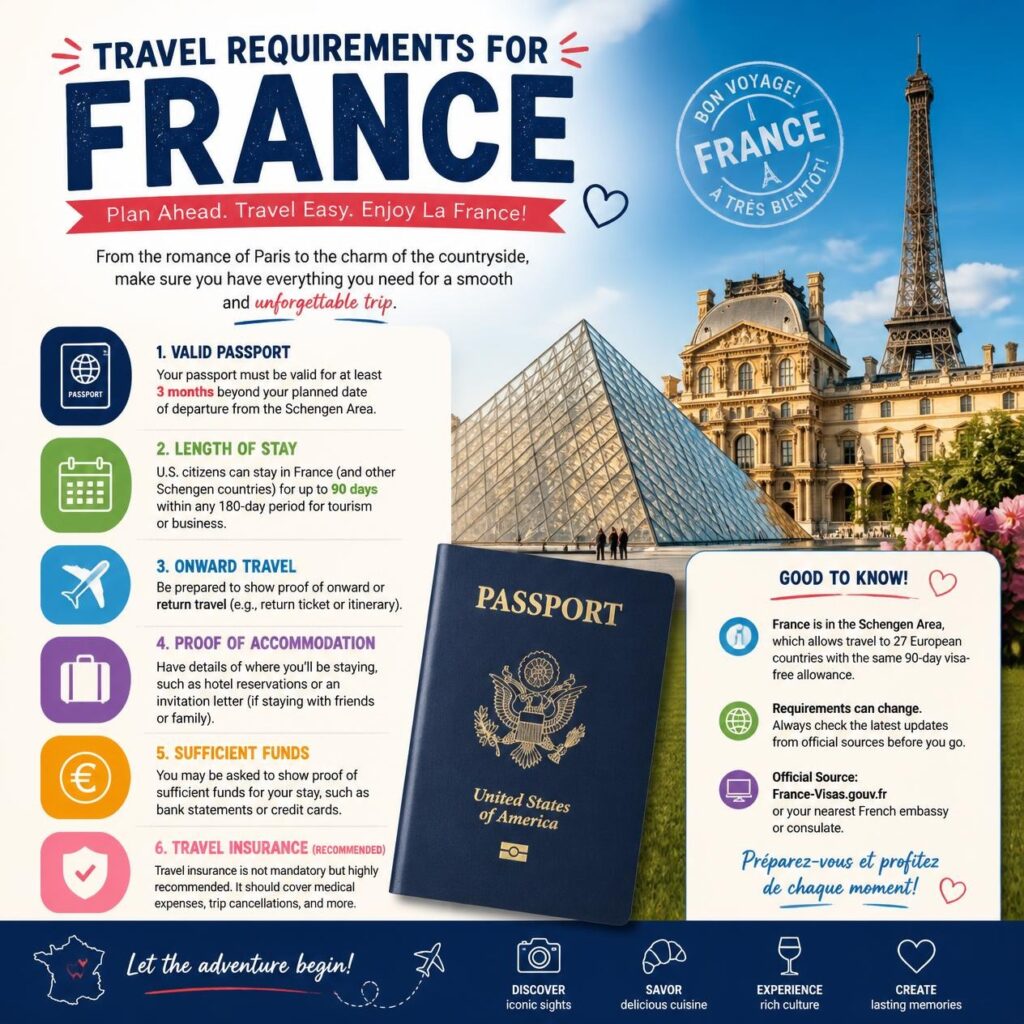
Do You Need a Passport to Go to France? Complete Guide for UK Travellers
Planning a trip to France from the UK and wondering, Do you need a passport to go to France? The short answer is yes, most British citizens need a valid passport to travel to France.
Whether you are flying to Paris, taking the Eurostar to Lille, driving through the Channel Tunnel, or travelling by ferry, you generally need an acceptable passport or travel document. A UK driving licence is not normally a substitute for a passport when travelling internationally.
The rules for British travellers visiting France changed significantly after Brexit. British citizens can generally visit France and other Schengen Area countries without applying for a short-stay visa for eligible visits of up to 90 days in any 180 days. However, visa-free travel does not mean that you can travel without a passport or ignore entry requirements.
Your passport must meet specific validity rules. In particular, British travellers should check both the passport’s expiry date and issue date before travelling.
Yes. British citizens generally need a valid passport to travel to France. For eligible short visits, British passport holders can usually travel without a short-stay visa for up to 90 days in any 180 days, subject to current entry requirements.
Do You Need a Passport to Go to France?
Yes, most people travelling from the UK to France need a valid passport or another accepted international travel document.
For British citizens, a valid British passport is normally the simplest and most commonly used document for travelling to France. The requirement applies whether you are travelling for a weekend holiday, visiting family, attending a business meeting, or taking a longer European trip.
You should not assume that the method of travel changes the passport requirement. Travelling by airplane, Eurostar, ferry, car, coach, or motorcycle does not generally remove the need for appropriate travel documentation.
A UK driving licence can prove that you are legally permitted to drive, but it is not normally a travel document that replaces a passport for international travel.
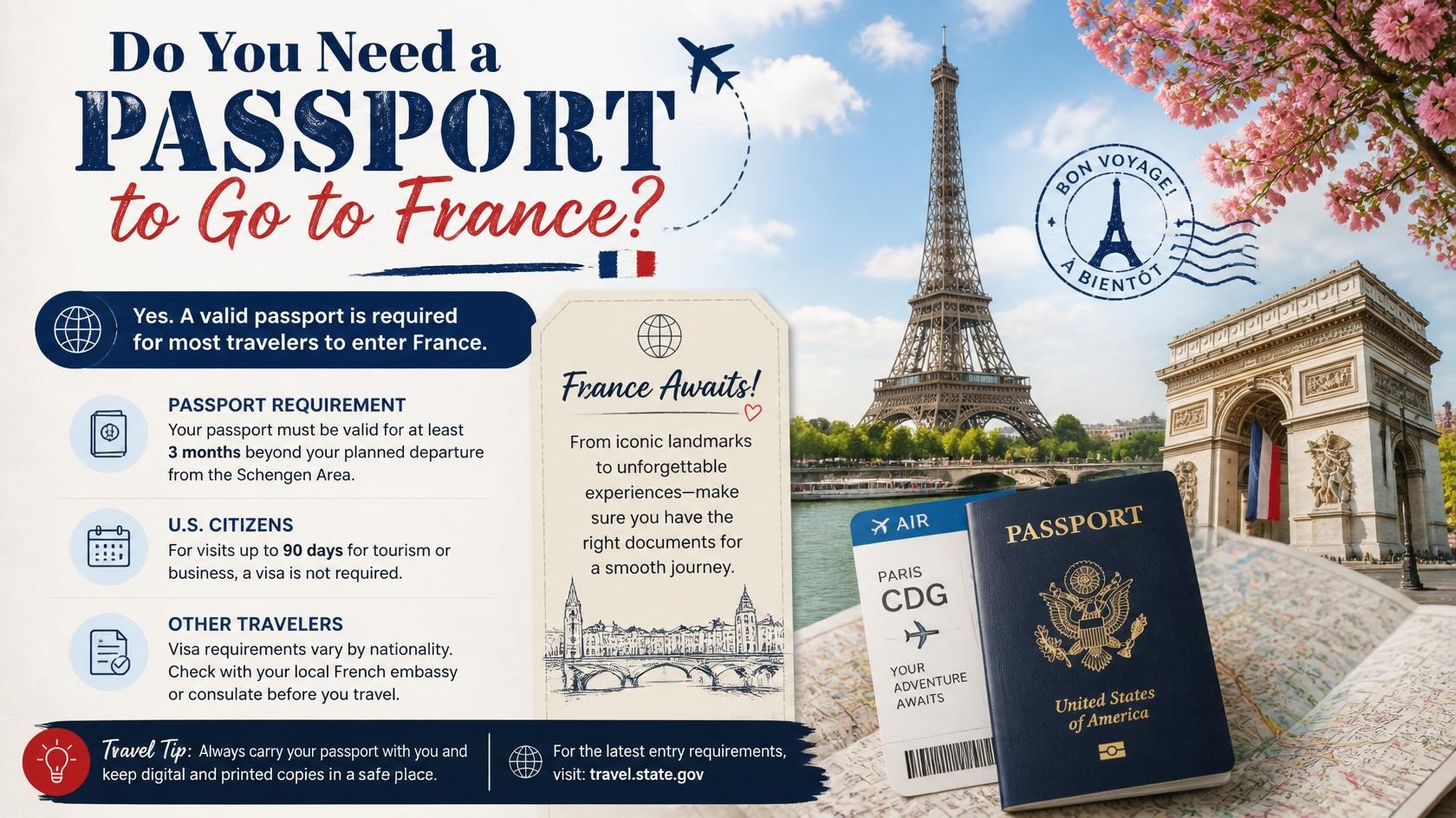
Quick Answer for British Citizens
- You generally need a valid passport.
- Your passport must meet the relevant Schengen validity requirements.
- You can usually visit visa-free for eligible short stays of up to 90 days in any 180 days.
- The 90-day limit applies across the Schengen Area.
- Different rules may apply to work, long-term study, residence, or other activities.
Do British Citizens Need a Passport for France?
Yes. British citizens generally need a valid passport when travelling to France.
The UK is not part of the European Union or the Schengen Area. As a result, British citizens travelling to France are subject to the entry rules that apply to visitors from outside the EU/EEA, unless they have another nationality or immigration status that gives them different rights.
For most British tourists, this means carrying a valid passport that meets the applicable requirements.
What Does “Valid Passport” Mean?
A passport is not necessarily considered suitable for travel simply because the expiry date has not passed. For travel to France, you should consider:
- The passport’s issue date.
- The passport’s expiry date.
- The date you plan to leave the Schengen Area.
- Whether the passport is damaged.
- Whether the passport has been reported lost or stolen.
- Whether your name matches your travel documents.
How Long Must Your Passport Be Valid for France?
For British citizens travelling to France, the passport generally needs to satisfy Schengen Area requirements.
In general, your passport should:
- Have been issued less than 10 years before the date you enter the Schengen Area.
- Remain valid for at least three months after the date you plan to leave the Schengen Area.
Example of Passport Validity
Imagine that you enter France on 1 June and plan to leave the Schengen Area on 15 June. Your passport would generally need to remain valid for at least three months after your planned departure date.
However, passport expiry is not the only consideration. The passport issue date can also be important.
Why the Passport Issue Date Matters
Many travellers check only the expiry date on their passport. This can be a mistake.
Historically, some British passports could include additional validity time when a new passport was issued before the previous one expired. As a result, the expiry date could be more than 10 years after the original issue date.
For Schengen travel, the issue date may therefore be relevant.
Example
Suppose a passport was issued on 1 January 2017 and expires on 1 July 2027. If the traveller plans to enter France on 15 January 2027, the passport issue date may be important because it was issued more than 10 years before the date of entry.
This is why travellers should check both:
Passport issue date + Passport expiry date
rather than looking only at the expiry date.
Do You Need Six Months’ Validity on Your Passport?
Not necessarily.
Many travellers have heard the general advice that a passport must have six months remaining before travelling internationally. However, different countries and regions have different passport validity rules.
For British citizens travelling to France under the applicable Schengen requirements, the key considerations generally include:
- The passport issue date.
- The passport’s validity after the planned departure from the Schengen Area.
The exact requirement is not automatically the same as a universal six-month rule.
Best Practice
Even where your passport technically meets the minimum requirement, travelling with a comfortable amount of remaining validity can reduce stress. If your passport is close to expiry, renewing it before travelling may be worth considering.
Do British Citizens Need a Visa for France?
For most eligible short visits, British citizens generally do not need to apply for a short-stay Schengen visa before travelling to France.
British citizens can usually visit France for permitted short-term purposes for up to:
This can include activities such as:
- Tourism.
- Holidays.
- Visiting family.
- Visiting friends.
- Certain business activities.
- Attending some events.
- Certain short-term educational activities.
However, visa-free travel does not mean that all activities are permitted.
Tourism and Holidays
A normal holiday in France generally falls within the type of short-term travel that may qualify for visa-free entry.
Visiting Family or Friends
Visiting relatives or friends may also fall within permitted short-term travel. However, travellers should still ensure that they meet all applicable entry requirements.
Business Travel
Some business activities may be permitted during short-term visa-free travel, but not every form of work or commercial activity is treated the same way.
Attending a meeting is different from taking employment in France.
Understanding the 90/180-Day Schengen Rule
The 90/180-day rule is one of the most important requirements for British citizens visiting France.
The basic principle is that eligible visa-free visitors can generally spend up to 90 days in any rolling 180-day period in the Schengen Area.
The Rule Applies to the Whole Schengen Area
This is extremely important.
The 90 days do not reset every time you cross a border between Schengen countries.
For example, if you spend:
- 20 days in France.
- 15 days in Spain.
- 10 days in Italy.
- 5 days in Germany.
You have spent a total of 50 days within the Schengen Area, assuming all days fall within the relevant calculation period.
Example of a European Trip
| Country | Days |
|---|---|
| France | 14 |
| Spain | 10 |
| Italy | 8 |
| Germany | 6 |
| Total | 38 days |
How to Avoid Overstaying
- List your previous Schengen travel dates.
- Count the days you have already spent in the area.
- Add your planned trip.
- Check whether your total remains within the permitted limit.
- Seek advice if your situation is complex.
Do You Need a Passport to Travel to France by Plane?
Yes, generally.
If you fly from the UK to France, your airline or carrier will usually check your travel documents before boarding.
Your passport may be checked during:
- Online check-in.
- Airport check-in.
- Baggage drop.
- Boarding.
- Border control.
Before Flying to France
- Check passport validity.
- Check the passport issue date.
- Check passport condition.
- Make sure your name matches your booking.
- Check visa and entry requirements.
Do You Need a Passport for Eurostar?
Yes.
Travelling by Eurostar does not remove international passport requirements. A journey from London to Paris is an international journey between the UK and France.
You should carry:
- Your valid passport.
- Any residence document relevant to your situation.
- Visa or immigration documents if required.
- Other supporting documentation where relevant.
Do You Need a Passport for a Ferry to France?
Yes, normally.
Whether you travel from Dover, Portsmouth, Newhaven, or another UK port, you should carry the appropriate travel document.
A ferry journey is still international travel.
Ferry Travel Checklist
- Check passport validity.
- Check carrier requirements.
- Check vehicle documentation if driving.
- Check insurance documents.
- Check visa requirements if applicable.
- Check requirements for children travelling with you.
Do You Need a Passport When Driving to France?
Yes, generally.
Driving to France does not eliminate the need for a passport. Your driving licence is important because it proves your entitlement to drive, but it does not normally replace your passport for international border crossings.
If You Drive Through the Channel Tunnel
You should have the appropriate passport or travel document for every traveller in the vehicle.
You may also need to consider:
- Driving licence requirements.
- Vehicle insurance.
- Vehicle registration documents.
- International driving rules.
- Travel insurance.
Do Children Need Passports for France?
Children generally need their own valid passport or another accepted travel document for international travel to France.
Parents should check their child’s documents before booking travel.
Check the Child’s Passport
- The passport is valid.
- The passport meets the relevant validity requirements.
- The passport is not damaged.
- The name matches travel bookings.
- The child has the necessary documents for the trip.
Travelling with an Infant
Babies and infants also require appropriate travel documentation when travelling internationally. Parents should not assume that a newborn can travel without a passport simply because they are travelling with a parent.
Travelling to France with One Parent
Travelling with children can involve additional practical documentation considerations, particularly when a child travels with only one parent.
Depending on the circumstances, it may be useful to carry evidence such as:
- Proof of parental relationship.
- A birth certificate.
- Evidence of parental responsibility.
- Written consent from another parent where appropriate.
Requirements can vary depending on the circumstances and the countries involved. The best approach is to check the latest official guidance before departure.
What If You Have Dual Nationality?
Dual nationality can affect your travel requirements.
For example, a person may hold:
- British citizenship and French citizenship.
- British citizenship and another EU nationality.
- British citizenship and another non-EU nationality.
The passport you use can affect the rules that apply to your journey.
Practical Tips for Dual Nationals
- Carry the relevant passports.
- Check entry requirements for France.
- Check requirements for returning to the UK.
- Make sure personal information is consistent.
- Carry residence documents where applicable.
What If You Live in France?
British citizens who legally reside in France may have different documentation requirements from tourists.
A person who lives in France may need to carry:
- A valid passport.
- A French residence document or other proof of status.
A residence document generally does not replace a passport.
Tourists Versus Residents
There is a major difference between a British tourist visiting France for two weeks and a British citizen legally resident in France.
The rules that apply may be different. If your situation involves residence rights, long-term stays, or immigration status, check the relevant official requirements before travelling.
Do You Need a Visa to Work or Study in France?
Possibly.
The answer depends on:
- Your nationality.
- The length of your stay.
- The purpose of your activity.
- The type of work or study.
- The applicable French immigration rules.
Tourism Is Not Employment
A tourist visa exemption does not automatically permit someone to work in France.
Attending a business meeting may be different from taking a job, providing services, working for a French employer, or performing paid professional activities.
Long-Term Study
A short educational activity may have different rules from a long-term university course. If you plan to study in France, check course length, institution requirements, immigration permission, and student visa requirements.
Can You Travel to France with an Emergency Passport?
This depends on the type of emergency travel document and the circumstances.
An emergency travel document is not necessarily treated in the same way as an ordinary passport.
If your ordinary passport has been lost or stolen while abroad, you may need to contact the relevant authorities to determine what document can be issued and whether it will be accepted for your intended journey.
If Your Passport Is Lost While Travelling
- Report the loss or theft where appropriate.
- Contact the relevant authorities.
- Check how to return to the UK.
- Check whether transit countries accept the emergency document.
- Confirm requirements with your carrier.
What If Your Passport Is Expired or Damaged?
An expired or damaged passport can cause serious travel problems.
Common Passport Problems
- Passport expires before the planned trip.
- Passport does not have sufficient validity.
- Passport was issued too long ago.
- Passport is torn.
- Personal details page is damaged.
- Pages are missing.
- Passport has water damage.
- Passport has been reported lost or stolen.
If you are concerned about your passport’s condition, replacing it before travel may be safer than waiting until you reach the airport or border.
France Travel Passport Checklist
Passport Checklist
- I have a valid passport.
- My passport was issued less than 10 years before my planned entry.
- My passport meets the required validity period after my planned departure.
- My passport is not damaged.
- My passport has not been reported lost or stolen.
- My name matches my travel booking.
- I have checked the requirements for my nationality.
Visa and Immigration Checklist
- I have confirmed whether I need a visa.
- I understand the 90/180-day rule if it applies.
- I have checked whether my activity is tourism, business, work, or study.
- I have checked whether I need additional permission.
Family Travel Checklist
- Every child has an appropriate travel document.
- I have checked requirements for children travelling with one parent.
- I have relevant supporting documents where necessary.
Common Mistakes British Travellers Make
Checking Only the Expiry Date
The expiry date is important, but the passport issue date may also matter for travel to the Schengen Area.
Assuming a Driving Licence Is Enough
A UK driving licence is not normally a replacement for a passport.
Assuming Visa-Free Means Document-Free
Visa-free travel still requires the correct passport or travel document.
Forgetting Travel to Other Schengen Countries
Days spent in Spain, Italy, Germany, and other Schengen countries may count toward the same 90-day allowance.
Assuming Every Type of Work Is Allowed
Business meetings and employment are not necessarily treated the same way.
Waiting Until the Last Minute
Passport renewal or replacement can take time. Travellers should plan early.
Forgetting Children Need Documents
Children generally need their own appropriate travel documents.
France Travel Document Comparison Table
| Document | Is It Normally Suitable? | Important Information |
|---|---|---|
| Valid British passport | Yes | Must meet applicable validity requirements. |
| Expired British passport | Generally no | May require a different travel document. |
| UK driving licence | No | Does not normally replace a passport. |
| EU passport | Generally yes | EU citizenship may provide different rights. |
| Residence permit | Not normally by itself | Usually carried alongside a passport. |
| Emergency travel document | Depends | Acceptance depends on the document and circumstances. |
Pros and Cons of Travelling to France with a British Passport
Advantages
- Visa-free short visits: Eligible British citizens can generally visit France for permitted short stays without applying for a short-stay visa.
- Easy access from the UK: France is accessible by plane, train, ferry, car, and coach.
- Many travel options: Travellers can choose from various transport options.
- Popular destination: France offers cities, beaches, countryside, mountains, and cultural attractions.
Potential Challenges
- Passport rules require attention: Travellers must check issue date and validity requirements.
- 90/180-day calculation: Frequent travellers may find the Schengen calculation complicated.
- Work rules differ: A short tourist trip is not the same as working or living in France.
- Children may require additional planning: Family travel can involve extra documentation considerations.
- Rules can change: Travel requirements can be updated over time.
Frequently Asked Questions
Do You Need a Passport to Go to France from the UK?
Yes. British citizens generally need a valid passport or another accepted international travel document to travel from the UK to France.
Can I Go to France with Only a UK Driving Licence?
Generally, no. A UK driving licence is not normally a substitute for a passport for international travel.
Do British Citizens Need a Visa to Visit France?
Usually not for eligible short visits of up to 90 days in any 180 days. Different requirements may apply to work, long-term study, residence, or other activities.
How Long Must My Passport Be Valid to Visit France?
Your passport generally needs to meet the applicable Schengen requirements, including the relevant issue-date rule and validity after your planned departure from the Schengen Area.
Does My Passport Need Six Months Remaining?
Not necessarily. The applicable requirement is generally based on the Schengen passport-validity rules rather than a universal six-month rule.
Do Children Need Passports to Go to France?
Children generally need their own valid passport or another accepted travel document for international travel.
Do I Need a Passport for Eurostar?
Yes. International travel between the UK and France requires appropriate travel documentation.
Do I Need a Passport to Drive to France?
Yes, normally. A driving licence does not generally replace a passport for international travel.
Can I Stay in France for More Than 90 Days Without a Visa?
Not generally under standard visa-free short-stay rules. Longer stays may require a visa or other immigration permission.
What Happens If My Passport Is Damaged?
A severely damaged passport may cause problems at boarding or border control. If your passport is significantly damaged, consider replacing it before travelling.
Can I Travel to France If My Passport Expires Soon?
Possibly, but it depends on your exact travel dates and the applicable validity rules. Check both the issue date and the required validity after your planned departure.
Do I Need a Passport If I Travel to France by Ferry?
Yes, normally. A ferry is still an international journey.
Do I Need a Passport to Visit Paris?
Yes, British citizens generally need a valid passport to visit Paris and other destinations in France.
Can I Use an Emergency Travel Document to Travel to France?
It depends on the type of emergency document and the circumstances. Check whether the document is accepted for your planned journey.
Can I Work in France Without a Visa?
Not necessarily. Visa-free tourist travel does not automatically permit you to work in France.
Conclusion: Do You Need a Passport to Go to France?
So, do you need a passport to go to France?
For most British citizens, yes.
If you are travelling from the UK to France for a normal short visit, you generally need a valid passport that meets the applicable Schengen requirements. British citizens can usually travel visa-free for eligible short stays of up to 90 days in any 180 days, but this does not remove the requirement to carry the correct travel document.
Before your journey, check:
- Your passport expiry date.
- Your passport issue date.
- The required validity after your planned departure.
- Your previous Schengen travel.
- Your purpose of travel.
- Any additional requirements for work or study.
- Documentation requirements for children.
- Carrier-specific travel rules.
If your passport is damaged, expired, or unlikely to meet the entry requirements, consider renewing or replacing it before travelling.
Need Help with Passport or Documentation Services?
For passport applications, renewals, identity documentation, certified translations, apostilles, legalisation, and other government documentation needs, professional support may help you prepare your paperwork more confidently.