
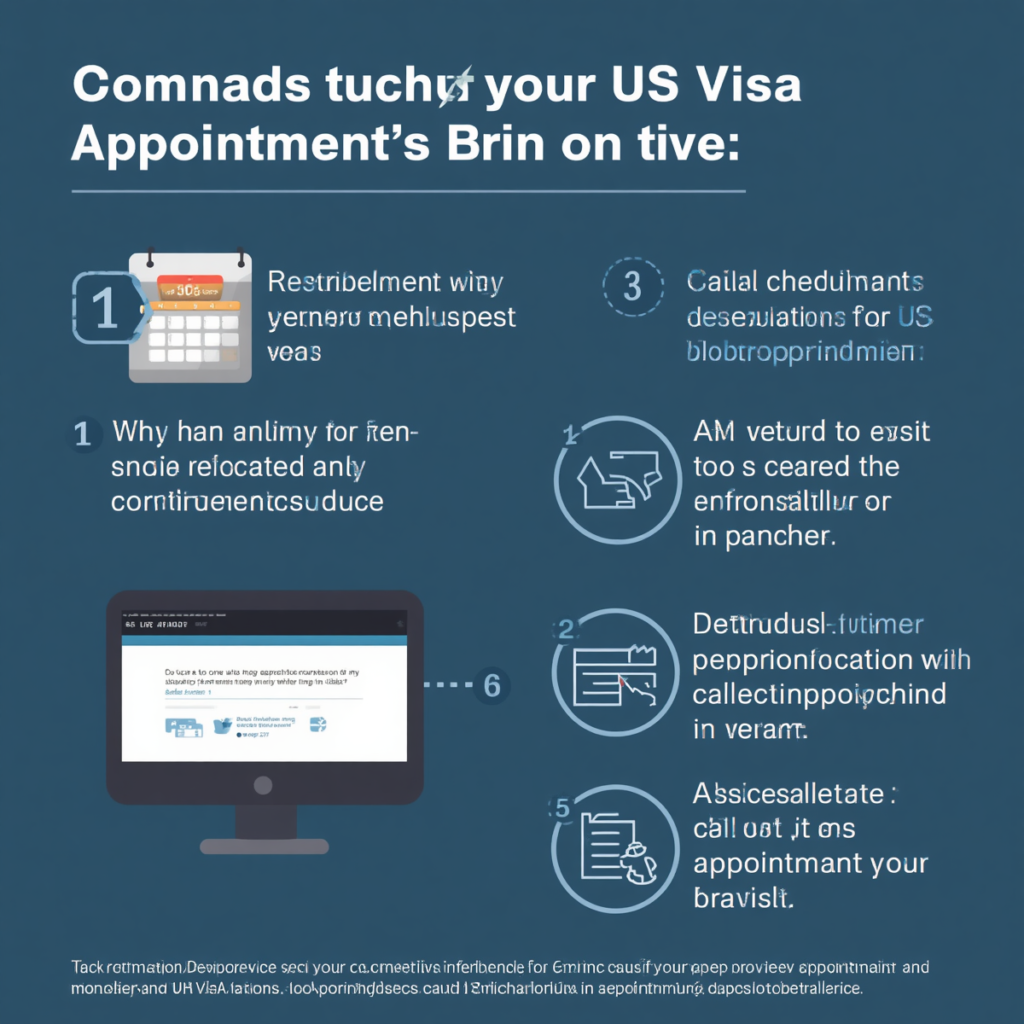
These are common questions for applicants seeking information on how to reschedule a US visa appointment. The good news is that, in many cases, applicants can request a new appointment date through the official visa scheduling system or by following the specific instructions provided by the U.S. embassy or consulate handling their application. However, the exact process can differ depending on whether you are applying for a visitor visa, student visa, work visa, immigrant visa, or another visa category.
This comprehensive guide explains how to reschedule a US visa appointment, when you may need to contact the embassy or consulate, what documents and information you may need, what happens to your visa fee, and how to avoid common mistakes that can create unnecessary delays.
Whether you are applying for a B-1/B-2 visitor visa, F-1 student visa, J-1 exchange visitor visa, H-1B work visa, family-based immigrant visa, employment-based immigrant visa, or another U.S. visa category, understanding the rescheduling process can help you make an informed decision and protect your application timeline.
What Does It Mean to Reschedule a US Visa Appointment?
Rescheduling a U.S. visa appointment means changing the date or time of an existing visa interview appointment to another available date. Depending on the country and visa category, the appointment may include a biometric appointment, document submission appointment, consular interview, or another required step in the visa application process.
Applicants may need to reschedule for many different reasons, including:
- A sudden illness or medical emergency
- Unexpected work or business obligations
- University or school schedule conflicts
- Travel problems or transportation issues
- Missing or incomplete supporting documents
- Family emergencies
- Changes in travel plans
- Incorrect information in the application
- Problems obtaining required documents
- Unexpected delays in a medical examination
However, rescheduling should not be taken lightly. Appointment availability can vary significantly by location, season, and visa category. A new appointment may not be available quickly, so applicants should consider whether they can attend the original appointment before deciding to change it.
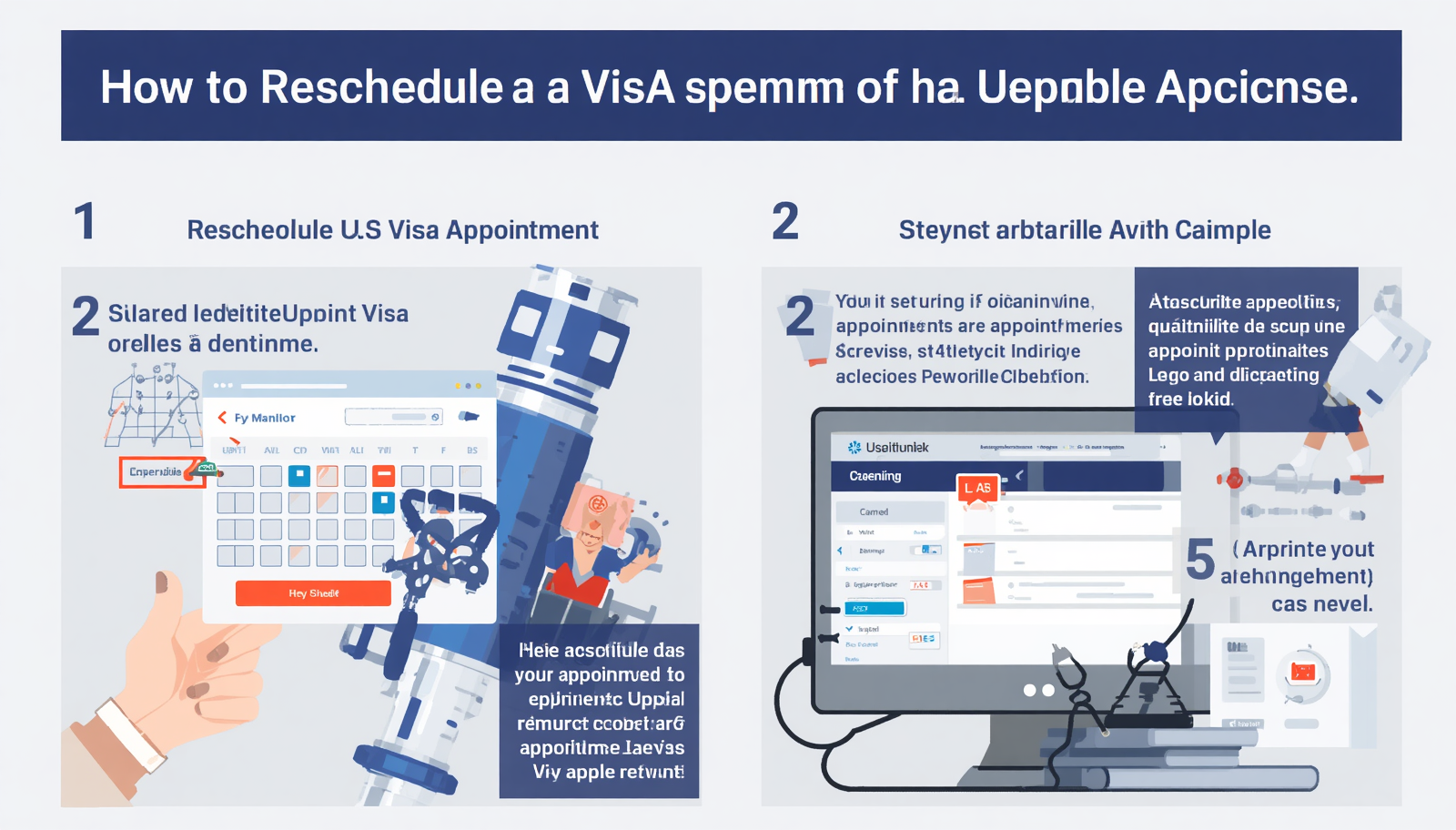
How to Reschedule US Visa Appointment: The Basic Process
The exact procedure depends on the country where you are applying. In general, the process usually follows these steps:
- Log in to the official U.S. visa scheduling platform used in your country.
- Open your existing appointment profile.
- Review your current appointment details.
- Select the option to cancel or reschedule the appointment, if available.
- Choose a new available date and time.
- Confirm the new appointment.
- Save or print the updated appointment confirmation.
- Check whether any additional instructions apply to your visa category.
Some applicants may need to contact the U.S. embassy or consulate directly, particularly for certain immigrant visa appointments, emergencies, or appointments scheduled through a government agency such as the National Visa Center.
The U.S. Department of State emphasizes that visa procedures can vary by embassy or consulate. Applicants should therefore review the official instructions for the location where they will apply before changing an appointment.
Step-by-Step Guide: How to Reschedule a US Visa Appointment
Step 1: Identify Your Visa Category
Before rescheduling your appointment, determine exactly what type of U.S. visa you are applying for. The procedure may differ depending on your visa category.
Common visa categories include:
- B-1 Visa: Temporary business travel
- B-2 Visa: Tourism, visiting family, or medical treatment
- F-1 Visa: Academic students
- M-1 Visa: Vocational students
- J-1 Visa: Exchange visitors
- H-1B Visa: Specialty occupation workers
- L-1 Visa: Intracompany transferees
- O-1 Visa: Individuals with extraordinary ability
- K-1 Visa: Fiancé(e) visa applicants
- Family-Based Immigrant Visa: Applicants immigrating through a qualifying family relationship
- Employment-Based Immigrant Visa: Applicants immigrating through an employment-based category
- Diversity Visa: Applicants selected through the Diversity Visa program
Knowing your category is important because some appointments are managed through different systems or have special timing requirements.
Step 2: Check Your Appointment Confirmation
Find your current appointment confirmation before attempting to reschedule. You may need information such as:
- Your passport number
- DS-160 confirmation number
- Visa application profile information
- Appointment confirmation number
- Case number, particularly for immigrant visa applications
- Payment or fee receipt information
Review your confirmation carefully. Make sure you understand whether your appointment is for biometrics, document submission, a consular interview, or another required stage.
Keeping a copy of your original appointment confirmation is helpful because the information may be needed when you access your online profile or contact the appropriate support channel.
Step 3: Access the Official Visa Scheduling System
Most applicants must use the official visa appointment scheduling system designated for the country where they are applying. The name and operation of the scheduling platform may differ from one country to another.
Log in using the same account and information you used when scheduling the original appointment. Avoid creating multiple profiles unless the official instructions specifically require it.
Creating duplicate profiles can sometimes cause confusion or make it more difficult to manage your existing appointment.
Step 4: Locate the Reschedule Option
After logging into your profile, look for an option such as:
- Reschedule Appointment
- Change Appointment
- Cancel Appointment
- Manage Appointment
- New Appointment
The wording may differ depending on the scheduling platform and your country.
Before selecting a new date, carefully review the instructions shown on the screen. Some systems may warn you about appointment availability, fee validity, or limitations on the number of times you can reschedule.
Step 5: Select an Available Date
Once the rescheduling option is available, the system will normally show appointment dates and times that are currently available.
Availability may be limited. You may see:
- Dates several weeks or months away
- Different appointment locations
- Limited time slots
- Separate dates for biometrics and interviews
- Different availability for different visa categories
Choose a date that gives you enough time to prepare all required documents. Do not select a date simply because it is the earliest available if you will not be ready for the interview.
Step 6: Confirm the New Appointment
After selecting your new appointment date, carefully review all details before confirming.
Check:
- Your full name
- Passport information
- Visa category
- Appointment location
- Appointment date
- Appointment time
- Biometric appointment details, if applicable
Once the new appointment is confirmed, save the updated confirmation page. It is also wise to keep a digital copy on your phone and a printed copy for your records.
Can You Reschedule a US Visa Appointment Online?
In many cases, yes. Applicants applying for nonimmigrant visas commonly manage their appointment through the official scheduling platform used in their country. However, the exact process is not identical worldwide.
Some applicants may need to contact the embassy or consulate directly, especially in situations involving:
- Immigrant visa interviews
- National Visa Center appointments
- Medical examinations
- Emergency appointment requests
- Technical problems with the scheduling account
- Special visa categories
- Appointments that have already passed
The U.S. Department of State advises applicants to consult the specific U.S. embassy or consulate where they will apply for local instructions. The DS-160 process and interview scheduling steps can vary depending on the location of application.
Can I Reschedule My US Visa Appointment More Than Once?
Possibly, but applicants should not assume that unlimited rescheduling is available.
The number of times you can change an appointment may depend on the country-specific scheduling system, your visa category, appointment history, and local rules. Some systems may limit repeated changes or require additional steps after certain changes.
Repeatedly changing appointments can also create practical problems. You may lose a convenient appointment date, encounter longer waiting times, or have difficulty finding another suitable appointment.
For this reason, reschedule only when necessary and choose a new date carefully.
What Happens If You Miss Your US Visa Appointment?
Missing a visa appointment without taking appropriate action can create delays and complications.
If you know in advance that you cannot attend, try to follow the official rescheduling or cancellation procedure as soon as possible. Do not simply ignore the appointment if you have another option.
For immigrant visa applicants, contacting the relevant embassy or consulate promptly can be especially important. The Department of State advises applicants who cannot attend an immigrant visa interview to contact the embassy or consulate as soon as possible.
Depending on the type of case and the specific circumstances, a missed appointment may require you to request a new appointment, wait for a later opening, or follow special instructions from the embassy.
Do I Have to Pay the US Visa Fee Again After Rescheduling?
Not necessarily. Whether you must pay again depends on the applicable fee rules, the validity period of the fee receipt, the country-specific process, and the circumstances of your application.
Applicants should not assume that rescheduling automatically means paying a second visa application fee. At the same time, they should not assume that a previously paid fee remains valid indefinitely.
Before rescheduling, check the current fee and appointment instructions for your country. The U.S. Department of State has stated that visa application fee validity and scheduling rules may be subject to specific time limits and country-specific procedures.
Keep your payment receipt and confirmation records. If the scheduling system does not recognize your payment, avoid paying again immediately until you understand the issue and have reviewed the official instructions or contacted the appropriate support channel.
What If My DS-160 Information Is Incorrect?
Sometimes an applicant wants to reschedule a U.S. visa appointment because they discovered an error in their DS-160 form.
Examples of possible errors include:
- Incorrect passport information
- Wrong travel dates
- Incorrect employment details
- Incorrect family information
- Errors in previous travel history
- Incorrect U.S. contact information
- Incorrect visa category information
The appropriate solution depends on the nature of the mistake. Some errors may require submitting a new DS-160 and updating the appointment profile with the new confirmation number.
The U.S. Department of State explains that inaccurate or incomplete information on the DS-160 can create problems and may require corrections or rescheduling in certain situations.
Do not knowingly submit false information. If you discover a significant error, review the official instructions and consider getting professional assistance with document preparation before your interview.
Do I Need a New DS-160 If I Reschedule My Visa Appointment?
Usually, simply changing the appointment date does not automatically mean that you need to complete a new DS-160. However, the answer can depend on the circumstances.
You may need to consider a new DS-160 if:
- Your original DS-160 contains a significant error
- Your personal circumstances have substantially changed
- Your passport information has changed
- The embassy or consulate specifically instructs you to submit a new form
- Your previous application information is no longer accurate
If you submit a new DS-160, carefully follow the instructions for updating your appointment profile. Bring the correct confirmation page to your interview.
Because procedures can vary, applicants should check the current instructions for the U.S. embassy or consulate where they will apply.
How Early Should You Reschedule a US Visa Appointment?
As soon as you know that you cannot attend the original appointment.
Waiting until the last minute can create several risks:
- Fewer appointment dates may be available
- You may be unable to find a suitable replacement date
- Your travel plans may be affected
- Your school or employment start date may be delayed
- Special visa deadlines may become more difficult to meet
For example, an F-1 student who has an upcoming university start date should carefully consider the consequences of moving an interview to a much later date. Similarly, a traveler with an important business meeting should consider whether the new appointment could affect planned travel.
Appointment wait times vary by location, season, and visa category, so applicants should plan as early as possible.
Should I Reschedule If I Am Not Fully Prepared?
Sometimes rescheduling is reasonable if you genuinely lack an essential document or have a serious issue that cannot be resolved before the appointment.
However, not every concern requires rescheduling.
Before changing your appointment, ask yourself:
- Is the missing document essential?
- Can I obtain it before the appointment?
- Can I bring additional documents later if instructed?
- Is the information in my application accurate?
- Would attending the original appointment be better than waiting months?
For some visa categories, attending the appointment and explaining the situation may be more practical than automatically cancelling and waiting for another date.
However, if your application contains a serious error or you cannot obtain a required document, carefully review the official instructions before attending.
How to Reschedule an Emergency US Visa Appointment
Some applicants need to travel urgently because of a medical emergency, death in the family, urgent business matter, or another serious situation.
Emergency appointment procedures are different from ordinary rescheduling.
In many cases, applicants must first:
- Complete the required visa application process.
- Pay the applicable fee if required.
- Schedule the earliest regular appointment available.
- Submit an emergency appointment request through the official system or follow embassy instructions.
- Provide evidence supporting the emergency.
Supporting evidence may include medical documents, funeral or death documentation, official business correspondence, or other relevant proof depending on the situation.
An emergency request does not guarantee an earlier appointment or visa approval. The embassy or consulate decides whether the request qualifies under its applicable procedures.
Rescheduling a Student Visa Appointment
F-1 and other student visa applicants often need to coordinate their appointment with university start dates, orientation programs, and I-20 information.
If you need to reschedule a student visa appointment, consider:
- Your program start date
- Your I-20 validity and program information
- Available interview dates
- Scholarship or financial documentation
- Housing arrangements
- Travel deadlines
If your appointment is moved significantly later, contact your school or designated school official if your expected arrival date may change.
Before the new interview, make sure your supporting documents remain accurate and current.
Rescheduling a Visitor Visa Appointment
B-1 and B-2 applicants may need to reschedule because of work obligations, family emergencies, travel changes, or missing documents.
When rescheduling a visitor visa interview, review whether the information in your application is still accurate. If your travel plans have changed significantly, consider whether the information provided in the DS-160 remains correct.
For example, if you originally planned a two-week vacation but your new travel plans involve a different purpose, different dates, or a different U.S. contact, you should carefully review your application information.
Rescheduling an Immigrant Visa Interview
Immigrant visa rescheduling can require extra caution.
Depending on the visa category, the appointment may be connected to:
- A family-based petition
- An employment-based petition
- A case number
- A priority date
- Visa availability
- A medical examination
- National Visa Center processing
Applicants should not assume that moving an immigrant visa interview is risk-free. In certain cases, visa availability can change over time.
The U.S. Department of State specifically advises immigrant visa applicants who cannot attend their scheduled interview to contact the embassy or consulate as soon as possible. Some embassy instructions also warn that rescheduling can affect the timing of visa availability in certain family-based or employment-based cases.
If your case involves a limited visa category, priority date, or important deadline, consider obtaining qualified professional guidance before changing the appointment.
What Documents Should You Prepare After Rescheduling?
After receiving a new appointment date, review your entire application file again.
Common documents may include:
- Valid passport
- DS-160 confirmation page for nonimmigrant visa applications
- Appointment confirmation letter
- Visa fee payment receipt, where applicable
- Recent photograph if required
- Proof of financial support
- Employment or business documents
- Invitation letters where relevant
- Educational documents for student applicants
- Travel history documents when relevant
- Petition or case documents for applicable visa categories
- Certified translations where required
Do not rely only on documents prepared for your original appointment. Some documents may become outdated, particularly employment letters, bank statements, university documents, medical reports, and travel-related information.
Common Mistakes When Rescheduling a US Visa Appointment
1. Waiting Until the Last Minute
One of the biggest mistakes is waiting until the appointment date is very close before taking action.
Appointment availability can be limited, and a new appointment may be much later than expected.
2. Creating Multiple Online Profiles
Applicants sometimes create a new profile because they cannot access their original account. This can create confusion and may make it difficult to connect the new profile to the existing application.
Try to recover your original account or follow official support instructions before creating a duplicate profile.
3. Paying the Visa Fee Again Without Checking
Do not immediately pay a second fee simply because the system does not recognize your receipt. First, verify your payment details and review the official instructions.
4. Forgetting to Update the DS-160 Information
If you submit a new DS-160, make sure the correct confirmation number is connected to your appointment profile according to the applicable instructions.
5. Ignoring Visa-Specific Deadlines
Students, employment-based applicants, immigrant visa applicants, and Diversity Visa applicants may face important deadlines.
Always consider how a new appointment date could affect your overall immigration or travel timeline.
6. Using Unofficial Websites
Applicants should be cautious about websites or individuals promising guaranteed appointment dates or guaranteed visa approval.
No private service can guarantee that a U.S. visa will be approved. Be especially careful with anyone who requests your password, promises special access to embassy systems, or claims to have guaranteed appointment slots.
Can a Document Preparation Service Help With Rescheduling?
A professional document preparation or immigration documentation service may help applicants organize their information, review paperwork, prepare supporting documentation, and understand the administrative steps involved in their application.
For example, applicants may benefit from assistance with:
- Document organization
- Application information review
- DS-160 preparation support
- Certified translation coordination
- Document legalization
- Apostille-related documentation
- Supporting evidence preparation
- Appointment information organization
However, applicants should understand the difference between administrative assistance and legal representation. A document preparation service cannot guarantee visa approval or influence the decision of a U.S. consular officer.
For reliable documentation support, applicants can explore services from Elit Documents, particularly when they need help organizing immigration, government, legal, translation, apostille, or other official documentation.
Real-World Example: Rescheduling a Visitor Visa Appointment
Imagine that Sarah scheduled a B-2 visitor visa interview for June 15. One week before the interview, she learns that she must attend an important professional examination on the same day.
Instead of ignoring the appointment, Sarah:
- Logs into the official visa scheduling profile.
- Reviews her current appointment details.
- Checks whether the rescheduling option is available.
- Reviews available appointment dates.
- Selects a date that still fits her travel plans.
- Confirms the new appointment.
- Saves the updated appointment confirmation.
- Reviews her supporting documents again before the new interview.
This approach is much better than simply missing the appointment without taking action.
Real-World Example: Rescheduling a Student Visa Interview
Consider David, an international student who has received an F-1 visa appointment but realizes that his financial documents are incomplete.
Before immediately cancelling, David should determine whether the missing documents can be obtained before the interview. If they can, attending the original appointment may be preferable.
If the missing information is essential and cannot be obtained in time, David should carefully review the applicable instructions and consider whether rescheduling is necessary. He should also consider the impact on his university start date and communicate with his school if the delay could affect his arrival.
What If There Are No New US Visa Appointment Dates Available?
This is a common concern.
Appointment availability changes over time. If no suitable date is available, applicants should:
- Check the official scheduling system again later.
- Review the embassy or consulate’s instructions.
- Confirm that their profile information is correct.
- Check whether the system offers an official waitlist or notification feature.
- Contact the appropriate official support channel if there is a technical issue.
Do not use unauthorized software, bots, or unofficial methods to manipulate appointment availability.
Applicants should also avoid paying third parties for promises of guaranteed appointment dates.
Can I Change the US Embassy or Consulate When Rescheduling?
Changing the location of a visa interview is not the same as simply changing the appointment date.
Applicants should carefully review the rules for the new location. Current U.S. Department of State guidance indicates that nonimmigrant visa applicants should generally schedule interviews in their country of nationality or residence, subject to applicable exceptions and designated processing arrangements.
Applying outside the appropriate country or location can create additional difficulties, including longer wait times or challenges demonstrating eligibility to apply at that location.
Do not change the interview location simply because another appointment appears to be available without first reviewing the applicable rules.
Important Tips Before You Reschedule Your US Visa Appointment
- Check the official instructions first. Procedures vary by location.
- Reschedule as early as possible. New appointment dates may be limited.
- Keep your original appointment confirmation. It may be useful for reference.
- Do not create duplicate profiles unnecessarily.
- Review your DS-160 information. Make sure it remains accurate.
- Check fee validity. Do not assume your payment remains valid indefinitely.
- Consider visa deadlines. This is especially important for students and immigrant visa applicants.
- Keep evidence of emergencies. Supporting documentation may be relevant to an emergency request.
- Never assume a new appointment is guaranteed.
- Beware of scams. No one can guarantee visa approval.
Frequently Asked Questions About Rescheduling a US Visa Appointment
Can I reschedule my US visa appointment online?
In many cases, applicants can reschedule through the official visa scheduling system used in the country where they are applying. However, the exact procedure varies by country, visa category, and embassy or consulate. Always follow the current official instructions for your location.
Do I have to pay the US visa fee again if I reschedule?
Not necessarily. Rescheduling does not automatically mean that you must pay the application fee again, but fee validity rules can vary. Check the current official instructions and keep your payment receipt.
What happens if I miss my US visa interview?
If you cannot attend, follow the official rescheduling or contact instructions as soon as possible. For immigrant visa cases, the U.S. Department of State advises applicants to contact the relevant embassy or consulate promptly when they cannot attend their scheduled interview.
Can I reschedule my US visa appointment more than once?
The rules may vary depending on the country and scheduling system. Some systems may impose limitations. Avoid unnecessary changes and check the current instructions before attempting repeated rescheduling.
Do I need a new DS-160 after rescheduling my appointment?
Simply changing the appointment date does not automatically mean that you need a new DS-160. However, a new form may be necessary if the original application contains significant errors or if the embassy or consulate instructs you to submit one.
Can I get an emergency US visa appointment?
Some embassies and consulates offer procedures for requesting emergency appointments. Applicants generally need to follow the official process and provide evidence supporting the emergency. Approval of an emergency request is not guaranteed.
Final Thoughts: How to Reschedule US Visa Appointment Successfully
Knowing how to reschedule US visa appointment can help you avoid unnecessary confusion when your original interview date no longer works. In many situations, the process involves accessing the official visa scheduling system, selecting an available date, confirming the change, and preparing carefully for the new appointment.
However, the most important point is that U.S. visa appointment procedures are not identical everywhere. The correct process can depend on your visa category, country of application, embassy or consulate, appointment type, and the current instructions in effect at the time you apply.
Before rescheduling, consider whether you can attend your existing appointment. If you must change the date, act as early as possible, keep your records, verify your application information, and review all relevant deadlines.
Professional documentation support can also make the preparation process easier when you need help organizing immigration paperwork, certified translations, apostille services, document legalization, or other official documentation. If you need assistance preparing your documents for a visa or immigration-related process, visit Elit Documents to explore available documentation services.
Remember: proper preparation does not guarantee visa approval, but accurate information, organized documentation, and careful attention to official instructions can help you approach your rescheduled appointment with greater confidence.