
If you are learning about driver’s licenses, you may have asked, what class is a normal driver’s license? It is a common question, especially for new drivers who see terms such as Class A, Class B, Class C, Class D, CDL, and noncommercial license.
The simple answer is that there is no single license class used across every U.S. state. The class of a normal driver’s license depends on the state where the license is issued and the type of vehicle you plan to drive.
In many states, a regular driver’s license is designed for everyday passenger vehicles. However, the letter or number used to identify that license can be different. For example, California identifies its basic noncommercial license as Class C, while New York uses Class D for ordinary passenger cars and light trucks.
This difference is important because you should not assume that a Class C license has the same meaning in every state. License classifications are created under state rules, and the vehicle requirements can vary.
This guide explains what a normal driver’s license means, how license classes work, the difference between regular and commercial licenses, and how to find the correct license class in your state.
What Class Is a Normal Driver’s License?
A normal driver’s license is generally the license that allows a person to operate ordinary vehicles for personal transportation. This may include a passenger car, SUV, minivan, or certain pickup trucks, depending on the rules in the state.
The exact class depends on your state.
For example, California says that most people need a noncommercial Class C driver’s license. Its Class C license covers standard vehicles and trucks for personal use, subject to the state’s requirements.
New York uses a different system. Its Class D license covers vehicles such as passenger cars and light trucks within specified weight limits.
So, if you are searching for what class is a normal driver’s license, the best answer is: check your state’s license classification system.
You may have a Class C license in one state and a Class D license in another while both licenses serve a similar everyday driving purpose.
Why There Is No Universal Normal License Class
The United States does not use one single state driver’s license classification for every jurisdiction.
Each state has its own Department of Motor Vehicles, Department of Public Safety, or similar licensing agency. These agencies establish rules for licensing drivers and identifying the vehicles they may operate.
That is why a person moving from one state to another should not automatically assume that the license class from their previous state has the same name or meaning.
USAGov provides a directory for state motor vehicle services, where drivers can find their state’s official motor vehicle agency and licensing information.
What Does a Regular Driver’s License Allow You to Drive?
A regular license generally allows you to operate vehicles that fall within the ordinary passenger-vehicle category defined by your state.
This often includes a personal car.
It may also include common vehicles such as SUVs, minivans, and certain pickup trucks.
However, the vehicle’s weight, seating capacity, intended use, and other characteristics can affect whether a regular license is enough.
For that reason, it is better to look at the vehicle requirements instead of relying only on the word “normal.”
What Does “Normal Driver’s License” Mean?
The phrase “normal driver’s license” is not usually the formal legal name of a license.
People often use it to describe a regular, standard, or noncommercial driver’s license.
This is the type of license most people need for everyday personal transportation.
For example, if you drive your own sedan to school, work, shopping, or other ordinary destinations, you generally do not need a commercial driver’s license simply because you are driving a motor vehicle.
The exact license requirements still depend on your state and the vehicle.
Normal Driver’s License vs. Noncommercial License
A noncommercial driver’s license is generally intended for driving that does not fall under commercial licensing requirements.
The term “noncommercial” is particularly useful because it distinguishes an ordinary license from a Commercial Driver’s License, or CDL.
California, for example, separates its driver’s licenses into noncommercial and commercial categories. Its basic Class C license is a noncommercial license for standard personal-use vehicles.
Other states use different class names, but the general distinction between ordinary and commercial driving remains important.
Is a Normal Driver’s License the Same as a Standard License?
In everyday conversation, the terms can often refer to the same general idea.
A standard driver’s license is usually the ordinary license issued to drivers who meet the state’s requirements for regular driving.
However, “standard” can sometimes have a specific administrative meaning in a state’s licensing system.
It is therefore important to check the terminology used by your state.
Is Class C a Normal Driver’s License?
In some states, yes.
California is a clear example. The California DMV identifies its Basic DL as Class C, and says most people need a noncommercial Class C driver’s license.
California also provides Class C sample knowledge tests specifically for regular drivers.
A California Class C license can cover ordinary vehicles such as cars, vans, and pickup trucks, subject to the state’s rules.
But Class C does not mean “normal driver’s license” everywhere.
New York provides a good example of why you need to check the state. Its Class D license covers ordinary passenger cars and light trucks within specified limits.
Why Class C Can Be Confusing
The term Class C can have different meanings depending on the licensing system.
In California, a noncommercial Class C license is commonly associated with ordinary personal vehicles.
But California also has a Commercial Class C license for certain commercial vehicles that require specific endorsements.
This shows why simply seeing the words “Class C” is not always enough.
You need to know whether the license is commercial or noncommercial and what vehicle category it covers.
Is Class D a Normal Driver’s License?
In some states, Class D is the ordinary driver’s license.
New York is one example.
The New York DMV’s current license-class information identifies Class D for vehicles such as passenger cars and light trucks, subject to the listed weight and towing rules.
This means a driver in New York may have a Class D license for ordinary driving, while a driver in California may have a Class C license for a similar everyday purpose.
Therefore, the answer to what class is a normal driver’s license depends heavily on where the license was issued.
Class D Does Not Mean the Same Thing Everywhere
Just like Class C, Class D can have different meanings in different jurisdictions.
The safest approach is to use the official licensing information for the state that issued your license.
If you are moving to another state, check the new state’s requirements rather than assuming that your old license class will have the same classification.
What Are the Main Driver’s License Classes?
Driver’s license classes are used to identify what kinds of vehicles a person is authorized to operate.
The most commonly discussed categories include Class A, Class B, Class C, and Class D, but the meaning of each class varies by state.
Some classifications are associated with commercial vehicles, while others are used for ordinary passenger vehicles.
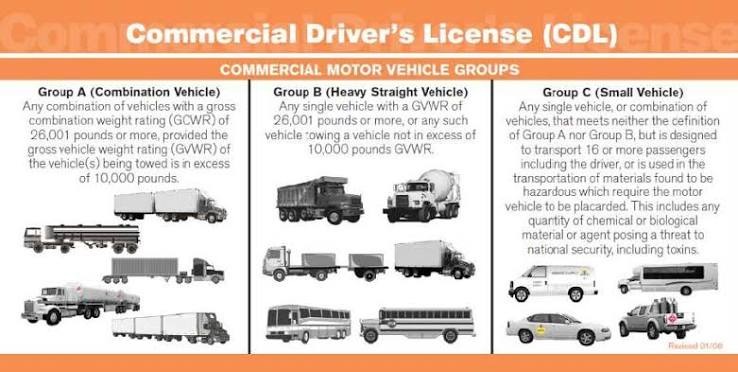
Class A License
A Class A license is often associated with larger vehicle combinations.
In California’s commercial system, a Commercial Class A license can cover certain combinations of vehicles with a gross combination weight rating of 26,001 pounds or more when the vehicle being towed exceeds 10,000 pounds GVWR.
This is very different from an ordinary passenger-car license.
Class A licensing is generally relevant to drivers who operate larger vehicles or combinations under applicable commercial rules.
Class B License
Class B is generally associated with certain large single vehicles.
California’s commercial Class B rules include single vehicles with a GVWR over 26,000 pounds and certain other vehicle configurations.
A Class B license therefore should not be confused with the ordinary license most people use to drive a family car.
Class C License
Class C is one of the most confusing classifications because it can refer to different things depending on the jurisdiction.
In California, a noncommercial Class C license is the basic license most people need for ordinary personal vehicles.
California also has a commercial Class C category for certain vehicles requiring endorsements.
The important point is that Class C does not automatically mean the same thing everywhere.
Class D License
Class D is used as a regular passenger-vehicle license in some states.
For example, New York uses Class D for passenger cars and light trucks within its stated limits.
This is why someone searching for the normal license class should always identify their state before deciding whether the answer is Class C, Class D, or another classification.
Normal Driver’s License vs. Commercial Driver’s License
One of the easiest ways to understand license classes is to compare an ordinary license with a CDL.
A Commercial Driver’s License is designed for certain commercial motor vehicles and has additional requirements.
A regular noncommercial license is generally intended for ordinary driving.
What Is a CDL?
A CDL is a Commercial Driver’s License.
It is required for certain types of commercial motor vehicles based on factors such as vehicle size, weight, configuration, and passenger or hazardous-material requirements.
Commercial licenses can also have endorsements.
California, for example, lists commercial Class A, Class B, and Class C licenses and identifies endorsements for areas such as hazardous materials, passenger vehicles, and tank vehicles.
Do You Need a CDL to Drive a Normal Car?
Usually, no.
A typical personal passenger car does not require a CDL simply because it is a motor vehicle.
Instead, drivers generally use the regular noncommercial license required by their state.
For example, California states that most people need a noncommercial Class C license for ordinary driving.
However, the exact requirements can change if the vehicle is unusually large, carries many passengers, or falls into another regulated category.
Class A vs. Class B vs. Class C vs. Class D
It is useful to understand these classifications at a high level.
| License Class | General Meaning | Common Use |
|---|---|---|
| Class A | Often associated with larger vehicle combinations | Certain heavy commercial vehicles |
| Class B | Often associated with larger single vehicles | Certain heavy trucks and buses |
| Class C | Meaning varies by state | Ordinary vehicles in some states; regulated commercial vehicles in others |
| Class D | Often used for ordinary passenger vehicles in some states | Cars and light trucks in states such as New York |
This table is only a general guide.
The official rules in your state should always take priority because license classifications are not identical across the country.
What Can You Drive With a Normal Driver’s License?
The answer depends on your state’s definition of its regular license.
For many drivers, the normal license covers common personal vehicles.
Passenger Cars
Passenger cars are the most common example.
A typical sedan, hatchback, coupe, or similar personal vehicle is generally operated with an ordinary driver’s license rather than a commercial license.
The vehicle must still meet the state’s registration, insurance, and safety requirements.
SUVs
Many ordinary SUVs can be driven with a regular driver’s license.
However, unusually large vehicles may fall under different rules depending on their weight or other characteristics.
Always check your state’s requirements if the SUV is particularly heavy or has unusual passenger capacity.
Minivans
A standard minivan used for personal transportation will generally fall within the ordinary passenger-vehicle category.
But a large passenger vehicle used for commercial transportation may have additional licensing requirements.
The purpose of the vehicle can matter as much as its physical size.
Pickup Trucks
Many ordinary pickup trucks can be driven with a regular license.
However, weight limits matter.
If a pickup is significantly heavier than a normal personal-use truck, a different license or classification may be required under applicable rules.
Does Vehicle Weight Affect Your License Class?
Yes.
Vehicle weight is an important factor in many licensing systems.
One common term you may see is GVWR, which means Gross Vehicle Weight Rating.
GVWR refers to the maximum loaded weight rating assigned to a vehicle by its manufacturer.
License rules may use GVWR or related weight measurements to determine which class is required.
Why GVWR Matters
A small personal car and a very heavy truck are both motor vehicles, but they do not create the same driving demands.
Larger vehicles can require additional training, testing, or licensing.
For example, California’s commercial license classifications use GVWR thresholds when determining whether certain vehicles fall into Class A or Class B categories.
Check the Vehicle Information
If you are unsure whether your normal license covers a particular vehicle, check the vehicle’s specifications.
You can often find weight information on the vehicle label, manufacturer’s documentation, or registration documents.
Then compare that information with the official rules from your state’s licensing agency.
Does Passenger Capacity Affect Your License?
Passenger capacity can also matter.
A regular family car carrying family members is different from a large vehicle designed to transport many passengers.
Some passenger vehicles may require additional licensing or endorsements, particularly when used commercially.
California, for example, identifies passenger endorsements as part of its commercial licensing system.
This is another reason not to rely only on the vehicle’s appearance.
A large van may look similar to an ordinary minivan but may have different requirements depending on how it is configured and used.
Can You Tow a Trailer With a Normal License?
Possibly.
Trailer rules vary by state and can depend on the weight of the trailer and the combined weight of the vehicles.
For example, California’s basic Class C license includes specific towing privileges based on vehicle and trailer weight.
New York also lists towing provisions for its Class D license based on GVWR and combined weight.
Therefore, if you plan to tow a trailer, do not assume that your regular license automatically covers every trailer.
Check the rules in the state where you will be driving.
How Do You Find Your Driver’s License Class?
If you already have a driver’s license, finding the class is often straightforward.
Check Your Physical License
Look at the front of your driver’s license.
Many licenses display the class or type directly on the card.
The exact location and wording can vary.
You may see a field labeled “Class,” “Type,” or a similar designation.
Check Your State DMV Website
If the information on the card is unclear, visit your state’s official DMV or licensing agency website.
USAGov provides access to state motor vehicle service information, making it easier to locate the correct state agency.
The official state source is preferable to a random website because licensing requirements can change.
Contact the Licensing Agency
If you still cannot determine what your license allows, contact the appropriate state licensing agency.
This is especially useful when you are driving a vehicle that is close to a weight, passenger, or towing limit.
Getting confirmation before driving is better than discovering a licensing problem later.
How Do Driver’s License Classes Work for New Drivers?
New drivers may encounter several terms that can be confusing.
A learner’s permit, provisional license, and full driver’s license are not necessarily the same thing.
Learner’s Permit
A learner’s permit allows a new driver to practice driving under specified conditions.
The exact rules depend on the state.
There may be requirements involving supervision, age, driving hours, passengers, or other restrictions.
Provisional License
Some states use a graduated licensing system.
A provisional or intermediate license can allow a young driver to drive independently while still applying certain restrictions.
These restrictions are designed to help new drivers gain experience.
Full Driver’s License
After completing the required steps, a driver may become eligible for a full driver’s license.
The requirements can include knowledge testing, driving testing, identity documentation, and other eligibility requirements.
The exact process is determined by the state.
What Is a Standard Driver’s License?
A standard driver’s license is generally the ordinary license issued for everyday driving.
It is different from specialized licenses or endorsements that authorize certain types of vehicles or driving activities.
However, “standard” can have a specific meaning depending on the state.
Standard License vs. REAL ID
REAL ID is another term that sometimes confuses.
REAL ID generally concerns identification standards rather than creating a completely different category of vehicle-driving privilege.
A REAL ID-compliant card can still be associated with an ordinary driver’s license class.
For example, California explains that its licenses can have different card designations while the underlying driving privileges remain based on the applicable license type and class.
Therefore, do not assume that getting a REAL ID automatically changes your driver’s license class.
Standard License vs. Enhanced License
Some states offer enhanced driver’s licenses.
An enhanced license can provide additional identification or travel-related functionality.
However, the presence of an enhanced designation does not necessarily mean you have permission to operate a different category of vehicle.
The driving privileges depend on the license class and applicable restrictions.
Common Driver’s License Restrictions
Having a regular license does not always mean you can drive without restrictions.
Your license may include specific conditions.
Corrective Lens Restriction
Some drivers may have a restriction requiring them to wear corrective lenses while driving.
If your license contains such a restriction, you are expected to follow it.
Age-Based Restrictions
Young drivers may have additional restrictions during the early stages of licensing.
These can include limits on passengers or nighttime driving.
The exact restrictions vary by state.
Vehicle Restrictions
A license can also contain restrictions related to the vehicles a person may operate.
This is particularly relevant when someone has a specialized license or has passed a driving test using a particular type of vehicle.
Common Mistakes About Driver’s License Classes
Understanding the common mistakes can help you avoid confusion.
Assuming Everyone Has a Class C License
This is one of the most common mistakes.
California uses noncommercial Class C for ordinary driving, but New York uses Class D for passenger cars and light trucks.
So, Class C is not a universal answer.
Assuming Class A Is a Better Regular License
Class A is not simply a “higher” version of a normal license.
It generally relates to vehicles or combinations that require a different level of authorization.
A regular driver does not need a Class A license simply because it sounds like a higher class.
Confusing CDL With a Normal License
A CDL is designed for qualifying commercial motor vehicles.
It is not required just because someone drives frequently.
The type and characteristics of the vehicle, along with applicable federal and state rules, determine whether commercial licensing requirements apply.
Ignoring Towing Requirements
A normal license may allow some towing but not every possible trailer combination.
Always check trailer weight and combined-weight requirements.
Using Another State’s Rules
A website explaining California rules may not answer a question about New York.
Likewise, information from New York may not apply to Florida, Texas, or another state.
Use the licensing authority for the jurisdiction that applies to your situation.
How to Check Your State’s License Requirements
If you want a reliable answer to what class is a normal driver’s license, follow a simple process.
Step 1: Identify Your State
Start with the state that issued your license or the state where you are applying.
This determines which licensing rules you should review.
Step 2: Identify Your Vehicle
Determine whether you are driving a car, SUV, pickup truck, van, bus, motorcycle, or another type of vehicle.
Step 3: Check the Vehicle Weight
Look at the vehicle’s GVWR and other relevant specifications.
Weight can affect licensing requirements.
Step 4: Check Passenger Capacity
If the vehicle carries many passengers, check whether additional licensing requirements apply.
Step 5: Check Towing Information
If you are towing, look at the trailer’s weight and the combined weight of the vehicles.
Step 6: Review Official State Information
Use the state’s official DMV or motor vehicle agency.
USAGov’s state motor vehicle directory is a useful starting point for finding the appropriate state agency.
Examples of Normal License Classes
Looking at real state examples makes the subject easier to understand.
California Example
California says most people need a noncommercial Class C driver’s license.
The California DMV describes its basic Class C license as covering a standard vehicle or truck for personal use, subject to its rules.
The California Driver Handbook also states that most people need a noncommercial Class C license.
This makes Class C a good example of a normal driver’s license class.
New York Example
New York takes a different approach.
Its current license-class document identifies Class D for passenger cars and light trucks within specified weight limits. (NY DMV)
So a normal driver’s license can be Class C in one state and Class D in another.
Why These Examples Matter
These examples demonstrate the most important point of this article.
There is no nationwide rule saying that every normal driver’s license must be Class C.
Instead, the class is determined by the state’s licensing system.
Frequently Asked Questions
What class is a normal driver’s license?
A normal driver’s license does not have one universal class across the United States.
In California, most ordinary drivers use a noncommercial Class C license. In New York, a regular passenger-car license is generally Class D.
Your state’s rules determine the correct answer.
Is Class C a regular driver’s license?
It can be.
California uses a noncommercial Class C license for most ordinary drivers.
However, Class C does not have the same meaning in every state.
Is Class D a regular driver’s license?
In some states, yes.
New York, for example, uses Class D for passenger cars and light trucks within its specified limits.
Do I need a CDL to drive a normal car?
Generally, no.
A typical personal passenger car is normally driven with the applicable noncommercial driver’s license.
However, larger or specially regulated vehicles may require a different license.
Can I drive an SUV with a normal driver’s license?
Usually, an ordinary personal SUV falls within the regular passenger-vehicle category.
However, unusually large or specialized vehicles may have additional requirements.
Check your state’s rules if you are unsure.
Can I drive a pickup truck with a normal license?
Many ordinary pickup trucks can be driven with a regular license.
The vehicle’s weight and configuration can affect the answer.
Always check your state’s requirements for heavier trucks.
Can I tow a trailer with a regular driver’s license?
Some regular licenses allow towing within specified limits.
The trailer’s weight, the towing vehicle’s weight, and the combined weight may matter.
For example, California and New York both have specific towing rules associated with their regular license classifications.
Where can I find my license class?
Look at the physical driver’s license for a field showing the class or type.
If you cannot find it, check your state’s official DMV website or contact the licensing agency.
Is a REAL ID a different license class?
Not necessarily.
REAL ID generally concerns identification requirements rather than automatically creating a new vehicle license class.
The underlying driving privileges are still determined by the applicable license class and restrictions.
Is Class A better than Class C?
Not in the sense of being a better everyday license.
Different classes are designed for different vehicle categories.
A driver who only operates an ordinary passenger car generally does not need a commercial Class A license.
Why does my friend have a different license class?
Your friend may live in another state or operate a different type of vehicle.
States use different classifications, so two drivers with similar everyday driving needs can have different license classes.
Tips for Choosing the Correct License Information
When researching your license, always start with the official source.
Avoid relying on an old article because licensing rules can change.
Pay attention to the date of the information you are reading.
Also look at the exact vehicle category rather than assuming that every car, truck, or van has identical requirements.
If you are applying for a license for the first time, review the state’s current application and testing requirements.
If you already have a license, read the class and restriction information printed on the card.
For official state motor vehicle information, you can use the USAGov directory to locate your state’s appropriate agency.
Final Thoughts
So, what class is a normal driver’s license? The answer depends on the state. There is no single class that applies to every ordinary driver across the United States. California, for example, uses a noncommercial Class C license for most people who drive standard personal-use vehicles. (DMV California) New York uses Class D for ordinary passenger cars and light trucks within its specified requirements.
The most important thing is to identify the state whose rules apply to you and then check the official licensing information.
If you drive a normal passenger car, you will usually need the state’s ordinary noncommercial license. If you plan to operate a large truck, bus, specialized vehicle, or certain vehicle combinations, you may need another class or endorsement.
Understanding your license class helps you know what you are legally authorized to drive. When in doubt, use your state’s official DMV or motor vehicle agency rather than relying on a general answer from another state.
For the most accurate and current requirements, check the official government information before driving a vehicle that may fall outside the ordinary passenger-vehicle category.