
how to get us visa in uk have you ever stared at a visa application form, unsure whether you’re filling it out correctly, only to worry that one small mistake could cost you your trip, your interview slot, or even your visa fee? You’re not alone. Every year, thousands of travelers, students, job seekers, and business owners face rejection notices simply because they misunderstood the process, submitted incomplete documents, or missed a critical deadline.
Applying for a tourist visa doesn’t have to feel like navigating a maze blindfolded. Whether you’re a UK resident trying to figure out how to get a US visa in the UK, an American planning a trip to Britain and searching for how to apply for a UK visa in the US, or simply someone booking their first international holiday, the underlying process follows a predictable, learnable pattern.
In this comprehensive guide, we’ll walk you through everything you need to know: what a tourist visa actually is, the different types you might encounter, a detailed step-by-step application process, the documents you’ll need, common mistakes that lead to rejection, and expert tips to strengthen your application. We’ll also look specifically at applying for a US visa from the UK and a UK visa from the US, since these are two of the most searched visa routes in the world. By the end, you’ll have a clear roadmap and the confidence to handle your application yourself — or know exactly what to look for when hiring a professional visa assistance service.
What Is a Tourist Visa and Why Do You Need One?
A tourist visa is an official authorization issued by a country’s government that permits a foreign national to enter for leisure, sightseeing, visiting family, or short-term non-business purposes. It is not a work permit, a study permit, or an immigration status — it is strictly for temporary visits.
Not every traveler needs a tourist visa. Many countries have visa-waiver agreements or offer visa-on-arrival and eVisa options for citizens of specific nations. However, if you’re traveling from a country without such an arrangement, or the destination country requires prior screening, you’ll need to apply for a tourist visa in advance, often weeks or months before your intended travel date.
Why Governments Require Tourist Visas
- To verify the traveler’s identity and intentions
- To confirm the visitor has sufficient funds for their stay
- To ensure the traveler has ties to their home country (job, family, property) that make it likely they’ll return
- To screen for security, criminal history, or immigration violations
- To manage the volume and flow of international visitors
Understanding this purpose is important because your entire application — your documents, your interview answers, your cover letter — should be built around proving these exact points.
Common Types of Tourist Visas
Not all tourist visas are the same. Depending on the country, you may encounter one or more of these categories:
1. Single-Entry Visa
Allows one entry into the country within a specified validity period. Once you exit, the visa is no longer valid for re-entry.
2. Multiple-Entry Visa
Permits several entries within a defined period, which can range from six months to ten years depending on the country and your travel history.
3. eVisa or Electronic Travel Authorization (ETA)
An online-only application process, often faster and requiring no physical visa sticker or embassy visit. Countries like the UK, Australia, and increasingly the US (via ESTA for eligible nationalities) use variations of this system.
4. Visa on Arrival
Issued at the port of entry for eligible nationalities, usually requiring a valid passport, return ticket, and proof of funds.
5. Transit Visa
Required if you’re passing through a country en route to another destination, even if you don’t plan to leave the airport.
Knowing which category applies to your situation will determine your entire application pathway, so this should always be your first research step.
How to Apply for a Tourist Visa: Step-by-Step Process
While every country has its own specific requirements, the overall process for applying for a tourist visa follows a fairly universal structure. Here’s how to approach it methodically.
Step 1: Research the Specific Visa Requirements
Start by visiting the official embassy or consulate website of your destination country. Avoid relying on forums or outdated blog posts, since visa rules change frequently. Look specifically for:
- Visa category applicable to tourism
- Required documents list
- Processing times
- Fees and payment methods
- Whether biometrics or an in-person interview is required
Step 2: Gather Your Supporting Documents
This is the stage where most applications succeed or fail. Common documents include:
- A valid passport with at least six months’ validity beyond your travel dates
- Passport-sized photographs meeting exact specifications
- Proof of travel itinerary (flight reservations, not necessarily paid tickets)
- Proof of accommodation (hotel bookings or an invitation letter)
- Bank statements showing sufficient funds
- Proof of employment or business ownership
- Travel insurance (mandatory for many countries, especially in the Schengen area)
- A cover letter explaining the purpose and duration of your visit
Step 3: Complete the Visa Application Form
Most countries now use online portals for tourist visa applications. Accuracy matters enormously here — inconsistencies between your form and your documents are one of the top reasons for refusal. Double-check:
- Spelling of your name exactly as it appears on your passport
- Dates of travel and length of stay
- Previous visa history and travel record
- Contact and sponsor details, if applicable
Step 4: Pay the Visa Application Fee
Fees vary widely by nationality and destination, ranging from around $20 for some eVisas to over $185 for a US tourist visa (B1/B2). Keep your payment receipt, as you’ll often need to present it at your appointment.
Step 5: Schedule Your Biometrics or Interview Appointment
Many countries require applicants to visit a visa application center for fingerprinting, photographs, and document verification. For some nationalities, an in-person interview at the embassy or consulate is also mandatory. Book this appointment as early as possible, since slots fill up quickly during peak travel seasons.
Step 6: Attend Your Appointment or Interview
Arrive early, bring physical copies of every document (even if you uploaded them online), and dress neatly. If an interview is required, answer questions honestly, concisely, and confidently. Common interview questions include:
- What is the purpose of your visit?
- Who will you be staying with, and where?
- What do you do for work, and what is your income?
- Do you have family or ties in your home country?
- Have you traveled internationally before?
Step 7: Track Your Application and Receive Your Visa
Once submitted, most visa authorities provide a tracking number or online portal to check your application status. Processing times can range from a few days for eVisas to several weeks or months for embassy-processed visas. Once approved, review your visa carefully for errors in your name, passport number, or validity dates before you travel.
How to Get a US Visa in the UK
If you’re based in the United Kingdom and planning to visit the United States for tourism, the process runs through the US Embassy in London or the US Consulates in Belfast and Edinburgh. Here’s what the process typically looks like for UK-based applicants pursuing a B1/B2 tourist visa.
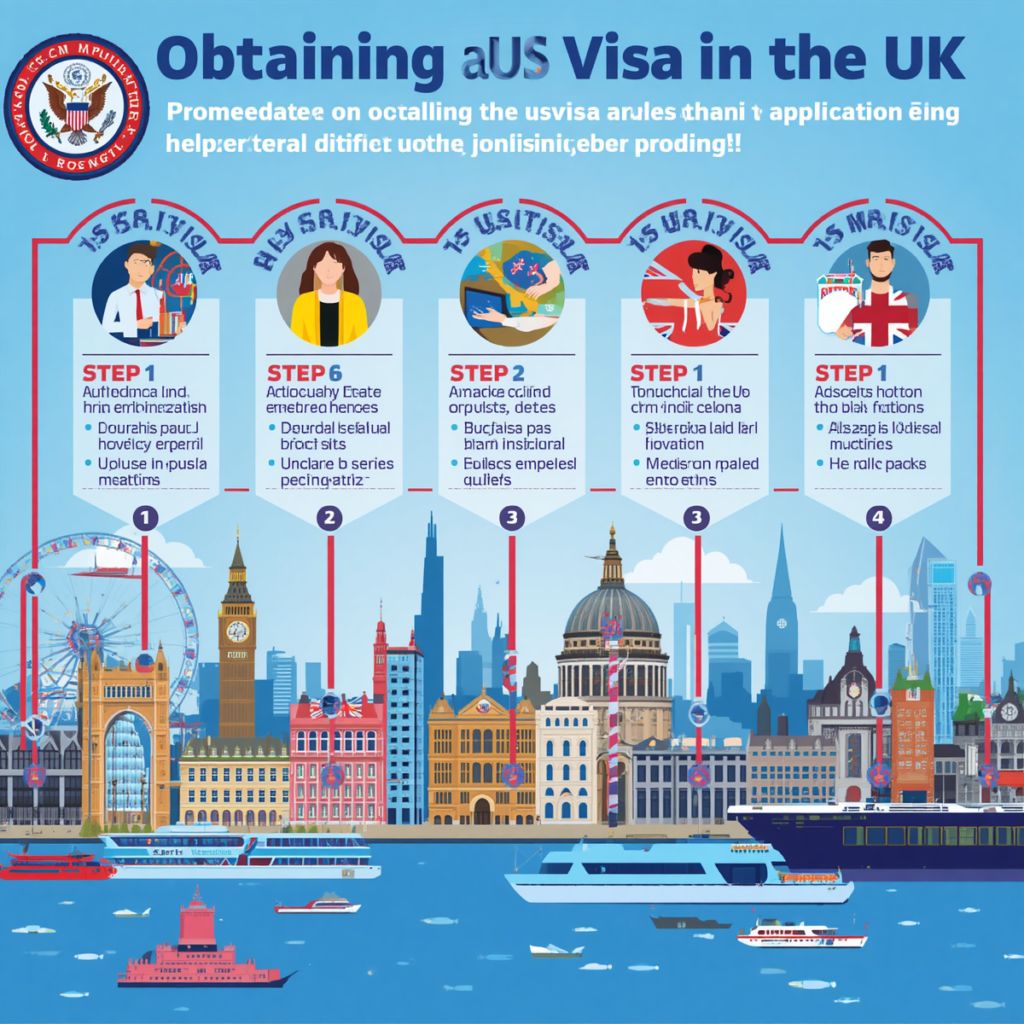
Step-by-Step: Applying for a US Visa from the UK
- Complete the DS-160 form: This is the online non-immigrant visa application form required for almost all US visa categories. It must be completed in English and submitted electronically before you can book an appointment.
- Pay the MRV (Machine Readable Visa) fee: This non-refundable fee must be paid before scheduling your interview.
- Create a profile on the official US visa appointment portal for the UK: This is where you’ll schedule both your biometrics appointment (if required) and your interview at the embassy or consulate.
- Attend your interview: Most UK applicants between certain age groups are required to attend an in-person interview, where a consular officer assesses your ties to the UK and the purpose of your trip.
- Wait for administrative processing (if applicable): Some applications are flagged for additional review, which can extend processing times beyond the standard timeframe.
Documents UK Applicants Typically Need
- Valid passport
- DS-160 confirmation page
- Visa appointment confirmation letter
- One recent photograph meeting US visa photo requirements
- Proof of ties to the UK (employment letter, property documents, family details)
- Bank statements or proof of sufficient funds
- Travel itinerary or explanation of trip purpose
One important tip for UK applicants: US tourist visas are generally issued for up to ten years with multiple entries, but this doesn’t guarantee entry each time. Immigration officers at the port of entry still have the final say, so always carry supporting documents with you when you travel, even after your visa is approved.
How to Apply for a UK Visa in the US
On the flip side, if you’re in the United States and want to visit the United Kingdom for tourism, the process is managed through UK Visas and Immigration (UKVI) and typically applies to non-visa-exempt nationalities, since many US citizens can actually visit the UK visa-free for short tourist stays under six months. However, if you hold a different nationality but are currently residing in the US, or you need a longer-stay visitor visa, here’s the general process.
Step-by-Step: Applying for a UK Visitor Visa from the US
- Check if you actually need a visa: Many nationalities can visit the UK for up to six months without a visa, but from 2025 onward, several nationalities require an Electronic Travel Authorisation (ETA) even for short visits.
- Complete the online application on the UK government’s official visa portal: This includes personal details, travel history, and the purpose of your visit.
- Pay the visa fee: Standard visitor visa fees apply, with optional add-ons for faster processing (priority or super priority service).
- Book a biometrics appointment: US-based applicants typically visit a UK visa application center (often operated through a visa outsourcing partner) to submit fingerprints and a photograph.
- Submit supporting documents: These can often be uploaded digitally rather than requiring an in-person interview, which makes this process comparatively faster than the US visa route.
- Track your application: Processing times are usually a few weeks, though priority services can shorten this significantly.
Documents Needed for a UK Visitor Visa from the US
- Valid passport with blank pages
- Completed online application confirmation
- Proof of accommodation in the UK
- Bank statements covering the last several months
- Proof of employment, business ownership, or enrollment (student applicants)
- Return flight itinerary
- A letter of invitation, if staying with friends or family
A key difference between the two routes is the interview requirement. The US process almost always requires an in-person interview, while the UK process is largely document-based, which can make it feel more streamlined but also puts more weight on the strength and clarity of your written application.
Key Documents Required for Tourist Visa Applications (General Checklist)
Regardless of destination, most tourist visa applications will ask for some combination of the following. Keeping a personal document folder — physical and digital — makes future applications significantly faster.
- Valid passport (with sufficient validity and blank pages)
- Passport-sized photographs (per exact specifications)
- Visa application form or online confirmation
- Proof of financial means (bank statements, payslips, sponsorship letters)
- Travel itinerary and accommodation details
- Travel insurance covering medical emergencies
- Proof of ties to home country (employment, property, family)
- Invitation letter, if applicable
- Previous visa copies or travel history, if applicable
- Certified translations of documents not in English (or the destination country’s language)
- Apostille or legalization of certain civil documents, if required
Why Document Translation and Apostille Matter
Many applicants overlook the fact that documents such as marriage certificates, business registrations, or bank letters may need to be translated and certified, or in some cases apostilled or legalized, before an embassy will accept them. This is especially common for long-stay visitor visas, business visitor visas, or when supporting documents originate from a third country. Using a professional document legalization or certified translation service can prevent delays caused by improperly formatted paperwork.
Common Mistakes to Avoid When Applying for a Tourist Visa
1. Submitting Incomplete or Inconsistent Documents
Mismatched names, outdated bank statements, or missing signatures are among the most common reasons for delays and refusals.
2. Applying Too Late
Processing times vary dramatically. Applying just weeks before travel, especially during peak seasons, significantly increases the risk of missing your trip entirely.
3. Providing Vague or Inconsistent Travel Purposes
If your cover letter says you’re visiting for tourism but your bank statements show payments related to business activity, this inconsistency can raise red flags.
4. Ignoring Financial Proof Requirements
Visa officers want to see that you can financially support your trip without needing to work illegally or overstay. Weak or unclear financial documentation is a frequent rejection reason.
5. Failing to Demonstrate Strong Home Ties
Whether it’s a job, a lease, a family, or ongoing studies, failing to show a compelling reason to return home is one of the top reasons tourist visas get denied, especially for first-time travelers or those applying from countries with higher refusal rates.
6. Overlooking Photo and Form Specifications
Something as small as an incorrectly sized photo or an unsigned form can bounce your entire application back, costing you both time and money.
Tips to Increase Your Chances of Visa Approval
- Apply early: Give yourself a comfortable buffer of at least 6-8 weeks before your travel date, longer during holiday seasons.
- Be honest and consistent: Every document, form entry, and interview answer should tell the same clear story.
- Keep financial documents recent: Most embassies prefer statements from the last 3-6 months.
- Write a clear, concise cover letter: State your purpose, dates, and intent to return, without unnecessary embellishment.
- Double-check every form entry: Small clerical errors can trigger unnecessary scrutiny or rejection.
- Keep copies of everything: Physical and digital backups of every submitted document can save you if something goes missing or needs resubmission.
- Dress and prepare professionally for interviews: First impressions matter more than most applicants realize.
- Use professional visa or document assistance services when needed: Especially for complex cases (business visitors, long-stay visas, multiple previous refusals), expert guidance can be the difference between approval and rejection.
How Professional Document and Visa Assistance Services Can Help
While many tourist visa applications can be completed independently, the process becomes considerably more complex when documents need translation, legalization, or apostille certification, or when an applicant has a complicated travel history, a previous refusal, or is applying on behalf of a business.
This is where professional document services add real value:
- Document preparation and review: Ensuring every form and supporting document meets the exact specifications of the destination country’s embassy.
- Certified translation: Converting civil, financial, or business documents into the required language with certified accuracy.
- Apostille and legalization services: Authenticating documents for international use, which is often required for long-term visitor visas or documents involving marriage, business, or education.
- Visa consultation: Helping applicants choose the correct visa category, avoid common pitfalls, and prepare compelling supporting cover letters.
- Appointment and interview coaching: Preparing applicants for what to expect and how to answer confidently and truthfully.
For travelers juggling tight deadlines, complex paperwork, or a history of previous refusals, working with an experienced document and visa assistance provider can dramatically reduce stress and improve the odds of a smooth approval.
Conclusion: Your Tourist Visa Journey Doesn’t Have to Be Overwhelming
Applying for a tourist visa can feel intimidating, especially the first time. But as this guide has shown, the process becomes far more manageable when broken into clear steps: research your destination’s specific requirements, gather accurate and consistent documents, complete your application carefully, attend your appointment or interview well-prepared, and track your application until approval.
Whether you’re navigating how to get a US visa in the UK, figuring out how to apply for a UK visa in the US, or preparing for any other international trip, the core principles remain the same: accuracy, consistency, and preparation are your best allies.
If you’d rather not navigate this process alone, or if your situation involves document translation, apostille certification, or a more complex travel history, our team of document and visa specialists is here to help. From preparing your paperwork to reviewing your application before submission, we make sure nothing stands between you and your next journey.
Ready to start your visa application with confidence? Contact our team today for personalized document preparation and visa assistance, and take the stress out of your next trip.
Frequently Asked Questions
How long does it take to get a tourist visa approved?
Processing times vary by country, ranging from a few days for eVisas to several weeks or even months for embassy-processed visas, especially during peak travel seasons.
Do I need travel insurance to apply for a tourist visa?
Many countries, particularly those in the Schengen area, require proof of travel insurance covering medical expenses for the duration of your stay. Always check your specific destination’s requirements.
Can a tourist visa be extended?
Some countries allow tourist visa extensions under specific circumstances, while others do not. It’s important to check the destination country’s immigration policies before your visa expires.
What happens if my tourist visa application is refused?
If refused, most embassies provide a reason for the decision. You can typically reapply, addressing the specific concerns raised, though repeated refusals can make future applications more difficult without stronger supporting documentation.
Do I need to prove my ties to my home country?
Yes, most visa officers assess whether you have compelling reasons to return home, such as employment, property, or family ties, as this reduces the perceived risk of overstaying your visa